13

13

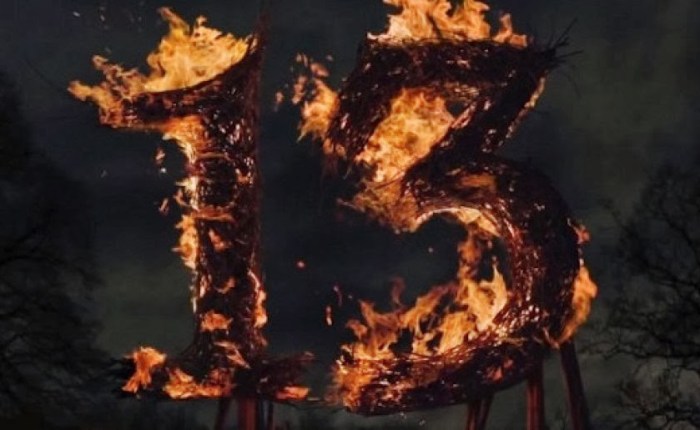
With this being my thirteenth article I thought it’d make good subject matter. Not the number itself, often termed as “unlucky for some,” but the Black Sabbath album. An album that didn’t rely on luck and certainly suffered from no ill fortune. Also we’ll take a look at how it has placed Sabbath in the modern world of music.

Even with the absence of Bill Ward the current incarnation of the band is widely seen as a return to the past, a last hurrah of the old boys. There have been calls from fans all over to get Bill on board but the contract dispute makes it seem unlikely to occur now, so we should enjoy and examine this Sabbath for all it is.

I can see both arguments for and against Bill Ward’s inclusion. Yes, he was a founding member and enjoyed a long run of success in the band. Many see him as much as Sabbath as Ozzy or Iommi. Sharon Osbourne would counter this by claiming Ozzy could make more money touring solo with Ozzfest and his appearance in the band now is for the fans – but he needs a higher cut. Iommi is Black Sabbath. The only member to appear on every single Sabbath album. His riffs not only make the band but defined a genre. Geezer Butler provides the signature bass and all the lyrics. When laid out like that it’s easy to see why they thought Bill was expendable.

The album the reunited members (with Brad Wilk as the sessions drummer) gave birth to was 13. It would have been so easy to produce a record that played by the numbers and offered nothing new or relevant. Instead it acknowledges its past, the lineage, whilst becoming as necessary as anything in the current metal scene. “End of Beginning” opens up with hints of NIB’s DNA before kicking up a gear or two. From the off the album gives the feel of an authentic effort. The popular “God is Dead” follows and the decades fall away. Iommi’s ability to produce a tune is reemphasised time and time again.

There are no weak songs on an album that isn’t afraid to change tone and pace. They could have taken the easy route and produced forty minutes of songs like the first two. Instead they are happy to play and twist all the sounds in their arsenal. “Loner” could have been taken from the Dio era with Ozzy adapting more than ever previously heard on a Sabbath record.

If “Loner” was revolution then the slow paced “Zeitgeist” is pure evolution from Paranoid’s “Planet Caravan.” Evidence of advancement is further found in “Age of Reason” which wouldn’t sound out of place on Metallica’s Death Magnetic. It’s fitting how a band that created a sound can progress further in the atmosphere developed by their students.

Geezer Butler over the decades has provided some great lyrics and this album equals most of them. “Damaged Soul” could well be his deepest metaphor yet. Age may have mellowed the players involved and it’s offered Geezer more introspective views on the world.

The album ends with rain and church bells, much like their debut album began. In doing so it gives a sense of completion, a circle that is now complete. If it is to be their last album I approve of the gesture – I’m a sucker for things with a cyclical nature.

But I have a feeling there is much more to come. The idea the last album loops to the first is great, but the gesture can also be seen as a nod to the past, confident they are rightly placed moving forward. It’s commendable that on this album they provided enough flavour of their former glories without becoming a parody of themselves. Whilst one shouldn’t get too carried away – it’s does lack the textures and depths attained in Vol 4 and Sabotage – they have pulled off the trick of being a genuine article of days-gone-by and something modern.

Like true legends, that have faced adversity before, the process of them coming together again hasn’t been easy, but they have managed to make it work. Contract disputes and well-documented illnesses aside, the feel of them live was missing as recent as 2012. I saw them perform when they headlined the Download Festival. It’d be easy to make excuses (Iommi was in recovery from his treatments; Ozzy had fallen off the wagon) but the fact was they hadn’t found their sweet-spot. For lesser bands they’d have called it a day. Seen it as a sign that perhaps they were past their best.

Not Sabbath. They carried on. 13 was completed and a world tour began. During the process they grew organically again. When I saw them in Manchester at the end of 2013 it was like being transported back in time. Ozzy sounded like he was on an LP, not a live mic. Iommi played effortlessly with great enthusiasm. Butler played as well as he did at Download – and for my money he was on fire there. Tommy Clufetos also provided the best drum solo I have ever witnessed, and I’ve seen Cozy Powell live and Roger Taylor play a bass with his drum sticks.

At one point Ozzy asked, “Should we come back and do this again?” The crowd roared approval. “I think we may,” he replied. Let’s hope they do. There’s still a role in the world of music for Black Sabbath to play.

How to Make The FA Cup Great Again

How to Make The FA Cup Great Again

Paul Lambert claimed this week that if asked, and they answered honestly, most managers would rather like to do away with The FA Cup. What a grim view of the oldest domestic cup competition in the world. The greatest domestic cup, in fact. I understand the sentiment he was trying to make but he is wrong.

As I have discussed in blogs here, and extensively in Financial Fair Prejudice, football today is a business. Lambert was highlighting how Premier League survival is more important than a good cup run, or even cup success, it seems. The implication that he’d trade places in The FA Cup for three points is disrespectful to the great competition. Whilst I understand the money on offer by competing in the Premier League overshadows the domestic cup competition in the modern game, I fail to believe proper fans want mid-table mediocrity for their entire existence over an FA Cup being added to an otherwise sparse history with regard to successes.

Of course the chairmen will take mid-table – hell, even a relegation battle every year – as long as the Premier League money keeps rolling in. Surely it’s better to go down, survive on the parachute payments, then return and be able to say you’d won the domestic big one. If Wigan do return to the Premier League in the next few years they’ll be no worse off than they were previous but their history is richer. The taste of one glorious day at Wembley makes an inevitable relegation easier to bear. And from disappointment tinged with success great things can grow. What Lambert suggests is we should all be happy with a bleak existence.

For those – like the Villa manager – that will never agree to this, that dream of one day flirting with a six place finish so they can qualify for the Europa League, which they can do if they win The FA Cup, I can offer one alternative. Wouldn’t it be great if The FA Cup winners gained entry to the Champions League? Suddenly the dismissive comments made about competing in The FA Cup disappear. Suddenly it’s one lotto every chairman in the land wants to buy a ticket for.

Thusly the problem emerges: UEFA would never want to allow the risk of a Wigan entering the top European competition whilst potentially battling in the Championship. I see the conundrum but it is a shame. Ignoring the fact the Champions League itself turns into a knockout tournament, so is a little lottery when all said and done, the fear a team too weak to qualify would prove unfounded. The prize of Champions League qualification would mean the top sides would try even harder to win it. To the point any team – even one from outside the established top six in the Premier League – would have to be deemed worthy as they’d need to defeat a usual Champions League opponent at some point. An opponent firing on all cylinders, focused on the ultimate prize.

If Champions League qualification was attached to The FA Cup imagine how electric the Wembley final would become once again. For children of my generation cup final day was the highlight of the year. The Superbowl of Soccer, if you will. By making victory equate to what only the top three teams in England gained after a long thirty-eight game season it’d have fans around the globe on the edge of their seats.

I mention the top three because clearly that qualification spot would be grabbed from the fourth placed team. This year’s Premier League has been the most open and engaging for a long time, imagine how much more fascinating it would be with less league qualification spots and the cup wildcard thrown in. And how’s this for a kicker – if a team outside the top three happened to win the Champions League that year it’d only be the top two and The FA Cup victors that would qualify alongside them. Those chairman in the usual top six would be the most reluctant to slim their league chances further. They’d be the minority. The majority would crave FA Cup football. At the moment everyone is lukewarm to The FA Cup and a minority placed in Premier League relegation fights seem to actively dislike it.

Let’s do what’s good for the many – not the few. The many clubs that would love a cup competition with such a rich prize, not to mention history. And the many, many fans. It’s always the fans that should matter first. Not chairmen blinded by money, or managers lacking imagination and desire.

We Need Our Christmas Crackers

We Need Our Christmas Crackers

A common remark made after England fail at a major tournament is that the Premier League should adopt the European approach of having a festive break. There have been, and will continue to be, lots of innovations and alterations to the modern game but this is one I’ll never take to. As a fan I love the crowded festive fixture list. I’d hate to see it removed for invalid reasons – let’s face it, one year off wouldn’t prepare the England players any better for a World Cup. Festive football is as seasonal as A Christmas Carol and the Queen’s Speech.

From previous blogs (“The Magic of the Cup”) it’s no secret I’m a bit of a traditionalist. But I’m also a realist, so not living an entirely romanticised version of football events. If lessening the fixture congestion served a purpose that enhanced the overall product then I’d be a fan. The truth is that it won’t, nor will it serve the national team in its efforts. The foreign players that compete in the Premier League seem to cope okay in major tournaments. Those partaking in the African Cup of Nations always appear fresh, or certainly no worse off for the endeavour.

Even if I was to accept – hypothetically speaking now – that the winter period drains players come the end of the season, I’d still rather we kept the set-up as it is. If it’s tiring for the players – apparently a modern professional requires 78 hours between games to make a complete recovery, I’m wondering if these figures have been mixed up with common Christmas hangover periods – it’s more tiring for the fan. I spend Christmas Eve tossing and turning in the hope Santa is bringing me presents. That means I’m up early to check if I have been a good boy (only once in living memory was I deemed bad, that was the year I didn’t get a PlayStation 1 but all my mates did) and in bed late that evening (hopefully) celebrating.

It doesn’t stop there. I rarely sleep due to excitement on Christmas night, too. The prospect of a full Premier League fixture list on Boxing Day is enough to keep me awake. I barely get over that before we head to the normal fixtures that week. All the time the New Year’s games are waiting. If new to football the Christmas period would provide the perfect crash course; for veterans it’s the season to be jolly, for sure.

In what has been a great season for the unpredictable, the games squeezed together at the end of December and the start of January will provide us with a marker of how things are likely to go as the league moves into its second half. Eventually form will be established – good or bad – and determine the fate of the teams. December is the start of that new phase.

The December 21st to 23rd games provide the first examination of how the top could go. Arsenal face Chelsea on Monday the 23rd at the Emirates. The Gunners need a win to prove they are genuine contenders and that they can turnover a top side after two defeats in Manchester, albeit one of those Manchester sides is now a mid-table team. Before that we’ll discover if Manchester City’s away form has steadied when they face a Fulham side starting to show signs of life. At the lower end a nervous Sam Allardyce takes his Hammers to Old Trafford. He’ll tell his players a win is possible, and point to United’s home form as proof, but it’s unthinkable that Moyes will face defeat there again so soon.

The Boxing Day games provide further examination of how genuine each team’s league position is. Everton face a stern test at home to a Sunderland side that has just beaten Chelsea in the League Cup. These are the sort of games a team needs to collect three points from if they are serious about securing European football. The aforementioned West Ham face Arsenal at home, by Boxing Day their predicament could have been worsened, Mr Wenger may well have a belated gift Big Sam doesn’t really want.

The tie of the day sees Liverpool travel to the Etihad. City is scoring for fun there at the moment. During the mauling of Arsenal, one fan in earshot jokingly remarked he was upset if they didn’t score five nowadays. At the time City had “only” managed four but his pains were rewarded with a couple more before the final whistle. Liverpool themselves handed Spurs a defeat that demonstrated they were far from being pretenders this year. It’s a shame we’ve been robbed of watching Aguero and Suarez on the same pitch but there’s enough talent to make this a mouth-watering game. If Liverpool take a point in Manchester it’d show they need to be taken seriously; failing that conceding less than five will do.

December 28th/29th matches will see Man City at home against a Crystal Palace side that, with all due respect, they will feel safe rotating players against. Liverpool face another tough away test at Chelsea. West Ham/West Brom; Hull/Fulham; Cardiff/Sunderland are a trio of ties that pit teams in six pointers in the relegation battle. Everton hosting Southampton gives us insight into two teams fighting it out for a top six spot.

The first game of 2014 sees Man City travel to Swansea and in the last game of the day Man United host Tottenham. In between these games clubs in close proximity to one another face-off – Palace/Norwich and Fulham/West Ham – whilst Arsenal and Liverpool will be expected to win their respective home games against Cardiff and Hull Tigers. The biggest factor may well be the strength in the squads rather than the preferred starting eleven.

At the end of this cycle big teams and strugglers alike will have dropped points. The crazy season may finally have started to settle. The teams then don’t play a league game for ten days. By my calculations that’s a big enough gap to squeeze a 78 hour rest in, especially if you want to skip some cup football.

And they say they need a winter break?