
I Can’t Breathe

I Can’t Breathe

Henry Nowak was a promising young 18-year-old man who was brutally murdered. Described as “kind, intelligent and talented”. His life was taken in a senseless, violent act. His murderer falsely accused Henry of racism to the police attending the scene. Their subsequent inaction – based on this accusation – condemned Henry to dying in handcuffs while repeating the words: I can’t breathe.

Those same words had been spoken by a man in police detention before. Famously by George Floyd, whose subsequent death during a police arrest led to mass protests – riots – politicians taking the knee. A movement whose core voice was also its name: Black Lives Matter. Anyone, from any race, colour or creed, asking parity for all lives had missed the point.

George Floyd, BLM, taking the knee — civil revolt, they are all by-products of their time and environment.

The treatment of Henry Nowak, the lack of reaction by the general public, the coverage by the mainstream media, and the juxtaposition of deafening silence by people – such as Keir Starmer – as details emerged, compared to the furore in the days following Floyd’s death, show that not only do we live in different times, but that there are different standards applied depending on race.

Instead of people pulling down statues, the wool is being pulled down over eyes and ears.

It is right to call for calm. To avoid using this tragic moment for further hate or political gain. Henry’s father, Mark Nowak, exemplified strength and dignity as he made a speech following the verdict. He said the family didn’t want Henry’s death to cause further division, hatred or tension.

It gave this writer pause before putting words to page.

Division. Hatred. Rising tensions.

All key ingredients for creating the sort of environment where innocent people die in the care of those expected to protect and to serve.

It’s only possible to find hope, love, and understanding through difficult conversations and hard choices.

Vickrum Digwa stabbed Henry five times with a religious ceremonial dagger, known as a kirpan. It is part of the Sikh religious code for believers to carry one. There are accepted alternatives to carrying a full dagger but under UK law, as long as the kirpan is being carried for religious practice, it is not illegal.

Understandably, the legality of carrying a weapon – albeit, purely as a religious artefact – has now come under scrutiny. Some of this will be from dissenting voices distrustful of any outsider faith, others from a place of logic and fairness. It should be noted Sikhs in the UK have a lower crime rate than other demographics while being disproportionately vulnerable to religious and racial hate crimes.

The actions of Vickrum Digwa shouldn’t drag an entire community into the firing line. The murder was the action of an evil individual who had been barred from a Gurdwara for his conduct. He is not reflective of Sikhism, which calls for equality of all mankind, honest conduct, and striving for justice.

Following the case, it is clear Digwa was a despicable human and a non-practising Sikh.

One bad example shouldn’t create division among different people and cultures.

However, if something can go wrong once, to the degree an innocent young man loses his life, every preventable action should be taken to stop it happening again. Blasphemy laws have been abolished in the UK. A step that is seen to modernise society. But to the side of this, certain religions have exemptions. These run counter to the clean worldview a post-blasphemy law country should look like.

No exemption should exist for any faith to carry what would otherwise be illegal.

The laws of the land should not bow to practices and beliefs from elsewhere. It has allowed one bad actor to find a loophole and carry out a heinous act. One time is one too many and it could inspire others to deliberately look for other ways to circumvent laws under the guise of religious freedom.

Creating exemptions – loopholes – is two-tier justice. There have been accusations of two-tier policing. Details that have emerged around police training suggest there has been an over-correction that has led police forces in the UK to be more concerned with appearing racist than acting without prejudice.

Henry Nowak said nine times that he couldn’t breathe.

He told them he’d been stabbed.

One officer replied: “I don’t think you have, mate.”

Of course he had been. Fatally. And the inadequate police inspection for any wounds was only part of the treatment – which Henry’s family described as “inhumane and degrading” – by the police which meant in the last moments of his life, he died without hope, in blind panic.

There was bias – how unconscious or deliberate, you can decide – with both George Floyd and Henry Nowak which led to their respective deaths.

For George Floyd, the attending police officer reacted with bias created because he believed the man in question was a threat and acted with inappropriate force.

Henry Nowak was the victim of a different fear: institutional terror of being seen as racist. To such a degree that an accusation of racism took operational priority over the duty of care to a dying victim.

Even as the details emerged, the power of racism drove the narrative and the media’s acknowledgement of the incident.

Floyd had fentanyl and methamphetamine in his system, which may have contributed to his death, while not being the cause. He didn’t comply with the arresting officers. But the story became charged. His death at the hands of law enforcement created a storm that travelled across the Atlantic, creating a watershed moment.

Nowak had less alcohol in his system than the UK drink driving limit. He had been falsely accused of being drunk, abusive and racist. He pleaded with the police for help, while being compliant with unnecessary handcuffing. While the key difference between the deaths – the police didn’t murder Nowak, Digwa did – the police in both instances acted on assumption and feeling. Fear without evidence.

The backlash has been subdued and gravitas of what such police behaviour represents downplayed by police commissioners and the Prime Minister.

George Floyd’s death was treated as a way to start the great exposé.

Henry Nowak’s has been met with an attempt to create a cover-up.

Some of the covering up is deliberate. It’s from the same agenda that created a world where being white means you can never be the victim of racism. It’s from a legacy media culture more comfortable exposing one kind of institutional prejudice than another. A Prime Minister who is aptly named Two-Tier Keir.

Some of it is so obtuse, it can only offend. Judge Mousley, when sentencing Digwa, started his minimum term at 15 years. In the UK, it is a mandatory life sentence of 25 years for murdering with a knife. Judge Mousley said Digwa hadn’t carried the murder weapon with the intention to use it. A non-Sikh would not be given this leniency if they’d been walking home from Argos with a new set of kitchen knives.

Judge Mousley added eight years (but removed two for “mitigating factors”) because Digwa “abused the privilege extended to Sikhs”. In doing so, reinforcing a two-tier view of the modern UK and protecting the sanctity of a religious exemption above the principle of equal law.

It is all indicative of an imbalance. But people’s rage has become colour-blind. Or worse, driven by the strongest virtue signal.

It is too insensitive to proclaim: White Lives Matter. But leader of the opposition, Kemi Badenoch, said “every life matters”. Which falls very close to another phrase. Writing in 2020 about the aftermath of George Floyd’s death, I wrote: People using the counter chant All Lives Matter, haven’t understood the core issues. It’s a big part of their privilege, believing a universal view is the fix for isolated problems they’ll never face.

It hasn’t aged well. We’re all facing different issues but they are by-products of the same misguided ideology. There is a universal fix: stop the overcorrection, the fear of being seen as something you are not, create a truly equal and fair society.

If your anti-racism, policing concerns, civil-liberty principles, rage against the establishment, or human-rights activism only activate for some victims, you are not seeking fairness or justice. They are nothing more than pliable and malleable principles shaped around misguided loyalty to causes only wearing justice’s clothing to cover harmful agendas.

Justice is when all lives are afforded the same set of rules and are judged through the same lens. No exceptions. No excuses.
Manchester SOS: Save Our Ship

Manchester SOS: Save Our Ship

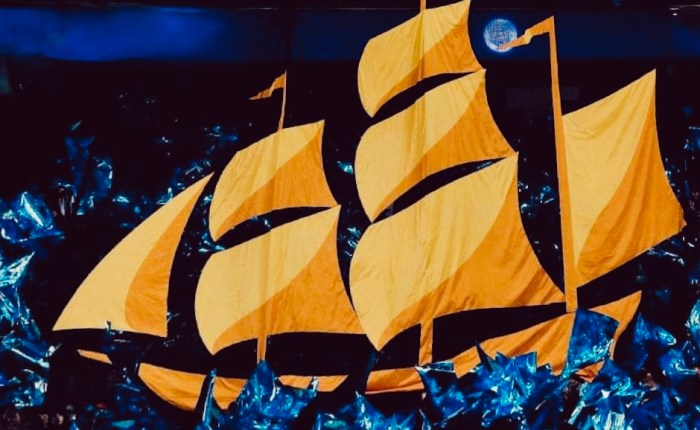
This week The Guardian published an article which claimed Manchester’s football clubs should remove the famous ship from their badges. The ship – which also features on the council’s Coat of Arms – was labelled as a symbol of slavery by journalist Simon Hattenstone. It shouldn’t be surprising The Guardian has managed to find something to be offended by when examining Mancunian symbols, it appears their job is to create issues where they don’t exist.

Not that slavery didn’t exist back when the ship symbol was adopted, nor an attempt to marginalise the effects of an abhorrent trade. Any suggestion that slavery should be celebrated or held aloft would rightly be condemned. But the Cult of Virtue Signalling has run into the problem all conspiracy theorists face: they only take the pieces of evidence which fit their narrative, discarding the rest.

This means everything presented lacks context. In the delicate case of slavery mentioned here, which happened in the nineteenth century, there should be consideration given to judging people by the standards of the day. A previously written piece on this site recalled how there were calls to remove several of Sir Robert Peel’s statues because his family profited from the slave trade. At the time, his father was breaking no recognised laws. By the standards of his day, there wouldn’t have been many complaints.

However, his son – Sir Robert – voted for its abolition. Yes, it can be argued he benefitted from the slave trade but the resulting power and influence helped bring about its end. He’s also the creator of the modern day police force, and brought in the Factory Act to minimise the working hours of women and children and introduced basic safety standards.

So, a pretty mixed bag, that’s impossible to reach a conclusion by wiping him from history. In comparison, the Manchester ship debacle created by The Guardian is easier to decipher.

Slavery had already been abolished when the ship was introduced as a city symbol. There is the misconception its existence is to mark the Manchester Ship Canal, but this isn’t the case. It was representing free trade. Manchester famously became the worker bees of the Industrial Revolution. Sadly, it’s less known just how prominent those workers were in ending slavery abroad.

Hattenstone would have you believe a booming Manchester was created off the backs of cotton slaves in the United States. This is false on two accounts. Firstly, Britain had also been using cotton from within its own empire, namely India. More importantly, Mancunian workers took a strong stance against the American Confederates. Liverpool had already been seduced by the wealth from “slave trade money” as the University of Manchester explains.

It was in Manchester where workers supported Lincoln and the American slaves and refused to conform to Confederate pressures. This even led to riots. The strength of character and principles cannot be overstated here. These were people who risked their very existence, struggling through a cotton famine, in order to enact a change for the better. A change that was on the other side of the Atlantic.

Are we to believe that workers who risked their livelihood to oppose slavery, later raised no objection to the city using a symbol celebrating the act? Or is it plausible that the ship’s inclusion was about free trade all along?

It would be ignorant to say Manchester – and Britain as a whole – didn’t at various points in history benefit from slavery. Where possible, appropriate reparations should take place. But The Guardian can’t pick a tiny snapshot of a situation, and make a large sweeping statement.

The Cult of Virtue Signalling should stop looking for extraneous links in an attempt to remove historical symbols and put some effort into preventing modern day issues. 

Why isn’t Hattenstone demanding Manchester City council close all the Nike stores in the area? His paper, The Guardian, wrote in 2001 that Nike couldn’t guarantee its products wouldn’t be made using child labour. Does anyone recall a twenty-year campaign from The Guardian to end child labour? Is it too far away from these shores to take an interest in? Because distance didn’t stop the ship symbol wearing workers of Manchester taking a personal stand against an issue on the other side of the world.

Do we excuse The Guardian because it’s socially acceptable to wear Nike trainers in spite of the links to child labour? On this issue, it must be okay to pass judgement based on the premise: we can only judge people based on the times they live in. This seems like double-standards.

Instead of trying to reinforce questionable links to slavery in Mancunian symbols, why isn’t The Guardian combating modern day slavery? There were 5,144 recorded offences in the year ending 2019. It’s safe to assume the real numbers dwarf this as organised crime makes it difficult for victims to escape.

Energy should be spent on real issues instead of creating strawman arguments where people in authority are too scared of opposing the view in case its weaponised against them politically.

Wouldn’t it be better to educate the people of today how we benefitted from slavery, acknowledge that evil, then explain how it was abolished and ultimately opposed in Manchester on behalf of those on another continent? That Manchester’s Ship is now a symbol of free trade, open shores — an open world, where every person is equal.

2010s: A Decade that invited the next Great Depression

2010s: A Decade that invited the next Great Depression

I once asked the question: why did I join Tumblr? The answer is probably for post likes this. The sort of post that is a personal reflection of something a wider audience doesn’t expect (or want) on my main site (but they’ll probably get anyway). The sort of post that looks back at a year, and then a decade. The sort of post that does so with a somber mood.

The Great Depression started in 1929, by then the world had seen one World War and was heading toward another. The turn of the new millennium has at least avoided this fate. It has followed history in other respects. The rise of the far right; anti-Semitism becoming commonplace, first with language and then actions; the poor being left further behind by the rich. 

Okay, we’re not heading to the sort of depression that was incorrectly labelled as Great. It’s a different type of one. The last decade — so devoid of colour it doesn’t even have a moniker like the swinging sixties or even the bland noughties — has invited a collective mindset to emerge that prays on fear and insecurities.

I wasn’t a massive fan of being a teenager, it’s apt that I’m not big on the decade with the teenage years in its numbering. The Tens (that’s what I’m going with) saw us accept the reduction of aspiration. We can thank austerity for this. If after years of being told there’s no money, a tightening of the belt required, it permeates into the collective mindset. Even for those that have disposable income.

Most of us ended up in houses we wished were bigger, working more hours than we’d like, mixing in shrinking social circles, watching others lead perfect lives on Instagram while being old enough to complain about it all on Facebook. Or in my case, not even bothering with the moan on Facebook because I can’t stomach the trawl through people’s dinners or exercise regimes.

It was a decade where Coldplay became the biggest stadium band on the planet. Now, I’ve been to several Coldplay gigs in the last decade so it’s safe to say I’m a fan but think about that for a minute: Coldplay are the biggest draw the globe has to offer. Coldplay.

They should be a great side act while generation defining entertainers shape the mood of the day. Instead, we see all acts from all decades converge via YouTube into every popular music venue around the planet. The time of today has become unstructured. Nothing defines The Tens. It was a place for compilation moods and the new blood was lacking any telling contribution.

Justin Bieber — a man with staying power and a massive fanbase — made the news in 2013 for not getting in a Manchester nightclub. A true global superstar that epitomised this decade could not enter a club incase he tarnished its image. That’s a club that no longer exists but were right at the time.

Of course, music is one aspect of a decade’s image. Politics is another that’s already been touched upon. The division will last another ten years unless a true centre-ground leader can unite the nation again.

Sport was better from this Man City fan’s perspective. Boxing saw some great fights and new household names emerge. It also saw some sports enter a beige state that’s indicative of the decade. Formula One hasn’t thrived since being sold to Liberty Media. It faces another year of purgatory before rule changes take effect.

Football is being damaged by the poor introduction of VAR. Real fans are becoming disillusioned with the clamouring to corporate types while the working class struggle to keep up. All the time, TV revenue rises and so do subscriptions. 

All this comes from a negative perspective. I’m sure there’s further evidence that less people are in poverty (on a global scale), there are less wars than ever and the standard of living has risen over the last forty years. It could be the forty year mark that has made this mindset appear. Hitting the big four-O creates a period of introspection.

The last year would be rated 4/10 if IMDb existed for dates and not movies. There have been personal achievements and life changes that viewed from the outside would make people expect it to be at least a 7/10. But the end of an average decade has been decidedly below average. Perhaps this is a natural decline in the order of things. My sister told me I was entering the Winter of my Life when forty came around. It was a joke with substance. 

The previous decade did appear like summer in comparison.

This is where a younger person will (rightly) complain about hearing the old “it was better in my day” line. For teenagers and young adults right now, I’m sure they can list many pop culture instances that — to them — match my own from yesteryear. They need to remember, this is my winter (or a very cold autumn).

The younger people also need to appreciate this decade is going to be remembered as the Snowflake Generation. It’s a time when people melt before your eyes with anything that slightly deviates from the clinical, politically correct handbook. Humour has been replaced with self-righteous application of impractical moral codes.

We all should respect one another. There should be fairness and equality for all. We shouldn’t stamp out any non-malicious viewpoint because of how it makes us feel. Comedy notoriously — and quite rightly — toes the line between offence and laughs. If you can’t laugh at something a comic says, it means you kinda have some intent when laughing along with other edgy jokes.

It’s also created a sub-culture of conditions. Everyone no has one. When I get depressed, I am depressed. It’s incredibly difficult to share that with anyone (99.9% of the time, I don’t). The “It’s okay not to be okay” campaigns have been great for raising mental awareness but over time they have been hijacked by those looking for the next fad.

The decade’s been so grim, people have been giving themselves faux conditions to be on trend.

That last remark will undoubtedly offend some people but it’s just my observation. It hasn’t been a collective time of improvement but one of whining. The Brexit situation comes to mind. People moaning about what is wrong rather than working to make it better (I’m aware of the irony this post represents here).

Big pressure on 2020 to step up to the plate. It’s got an uphill battle. 2019 left it in the shit. An impeached President, Boris Johnson the saviour of the British working class and Rod Stewart top of the album charts.

I remember Mad Dog 20/20. The idea of 2020 itself back then was futuristic; flavoured alcoholic drinks a little juvenile. The mad dogs are now here and everyone is necking more varieties of gin than a shelf of early alcopops could have ever dreamed up. 

Does this indicate a return to headier times? I’m going to buy some Hooch, just in case.