Lady Macbeth – Review

Lady Macbeth – Review

Since its release at the Toronto International Film Festival, Lady Macbeth has been teased to the general public via trailers that hint of lust and suffering. Now that it’s finally released to the wider public – receiving critical acclaim as early reports trickle in – it seems the peeks of the picture weren’t lying.

However, the scene they set isn’t the exact one we are given. And this diversion isn’t aided by those early critics and their misleading reviews. Lady Macbeth, so early into its life, faces the potential hazard of being a victim of presumed success and acclaim.

The story is a reworking of the 1865 novella Lady Macbeth of the Mtsensk District by Nikolai Leskov. The title was a nod to Shakespeare’s Lady Macbeth. Of course, she was a woman happy to commit murder to further her gains.

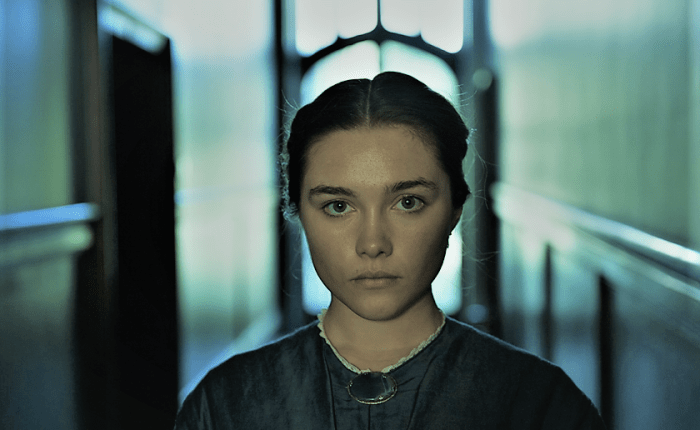
In Lady Macbeth, the female lead becomes Katherine, a young woman “purchased” by Christopher Fairbank’s Boris for his distant and cold son, Alexander, played by Paul Hilton. The setting is now Victorian North East England (complete with accents). The early scenes set the tone of the marriage and the house where Katherine resides. Boris has expectations of how his son should be satisfied.

In turn, Katherine is subservient to Alexander’s demands. But her husband would rather humiliate and degrade than allow actual closeness. The reason he favours belittling over making the marriage work, and why his abuse never escalates to the physical, is a theme left to fester without direct explanation.

It moves along in the early stages where, without much appearing to happen, a lot is going on. This trick is performed in no small part to Florence Pugh’s portrayal of Katherine. Her enforced reserve, and reluctant obedience, doesn’t mask the effervescent character bubbling below the surface.

When the men of the house leave on business for a number of weeks, it gives her free reign to attempt an escape from its claustrophobic confines. She is a girl that likes the outdoors but is treated like a caged bird. Free to walk the moors an unlocking of her mind begins. With it, her inhibitions fall away, desires are allowed to be explored.

Hearing a raucous commotion in the barns, she goes to investigate. There she discovers her servant, Naomi Ackie’s Anna, has been stripped and hung in a bag. The male workers are rowdy and behaving improperly. She commands they face the wall – treatment she is personally familiar with – sends Anna away, before chastising the men.

Rather than being the end of trouble, it opens Pandora’s box. It is here she meets Cosmo Jarvis as Sebastian. A love affair ensues that appears to be based purely on lust and forbidden sins. But that would be overly simplistic and deny Pugh the credit she deserves for leading Sebastian – and the viewer – on a journey of tainted love.

We saw in The Falling she can use sexuality as a tool for captivation, here the technique is far more subtle, much more explosive. She grows before our eyes, at times appears pained with potential outcomes, reveals humanity, acts as ruthless as a heartless animal, while remaining tempered throughout.

The overwhelming positive response to this film is really an accolade for Florence Pugh.

She is the medium the claustrophobic atmosphere uses to increase throughout. By breathing life into her character, it masks other failings. There wasn’t enough screen time – presumably due to budget constraints – for the descent to madness to be fully explored.

Shakespeare’s Macbeth sees its protagonists make cold decisions as they seek power, only to endure haunting demises. Pugh is barely allowed to tap into this facet before the viewer is served up a conclusion to the story (one that differs from the novella).

It means the gravitas of each choice is lost as we move to signposted events. For all Pugh’s excellent work, it means there comes a point empathy turns to dismay to disgust without the chance to consider the human side of her drives.

If love can be illogical, Lady Macbeth is a great advert for the emotion.

In time, expectations of the film will level and the great shining light – Florence Pugh – will be the only element worthy of note. When the contents of the story are taken into account, it means the film can’t be considered a complete success.
Shedding Some Moonlight on La La Land’s Oscars

Shedding Some Moonlight on La La Land’s Oscars

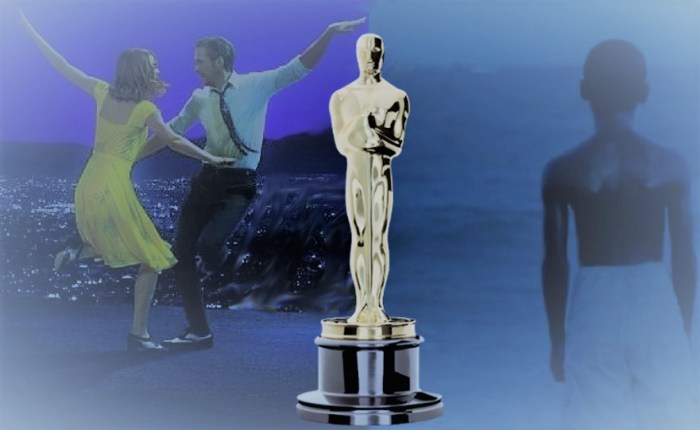
Between them, Warren Beatty and Faye Dunaway, managed to make the 89th Academy Awards end with a bizarre climax. Somehow Beatty was handed the envelope for Female in a Leading Role and stuttered from there toward a car crash not usually reserved for such a prestigious event. Dunaway jumped in, saw “La La Land” printed on the card, and the rest was history. Until history was corrected and Barry Jenkins’s Moonlight was revealed as the true winner.

The end took away from what should have been the true climax. The Academy’s triumphant step away from the dark ages and proof that #OscarsSoWhite has been acknowledged and corrected. But that statement, and position, threatens to diminish from Moonlight as a picture. The question is: did it win purely on merit when it seemed La La Land was nailed on to clean up in all categories?

The only way to judge, is to review each film on its strengths.

Moonlight, while being grounded in the harsh reality of Little’s life in the hood from the beginning, still manages to achieve stunning visual work. The rotating camera from the opening scene plants the viewer in a Boyz in the Hood world painted on an artistic canvas. He is befriended by Mahershala Ali’s Juan. He took the Oscar for this role last night, and it’s clear to see why.

The scene when he is teaching Little to swim is as immersive a piece of cinema you’ll see this year, matched by its supposed simplicity.

But nothing in Moonlight is simple. It’s a layered movie that takes Little from the bullied confused pre-adolescent to the isolated teenage version, Chiron. Here the movie explores the themes of sexuality that have become the main tag attached to the project. It wouldn’t work if it was just an exploration of this topic. Themes are compounded by his crack addict mother, isolation, and the powerful but fleeting connections Chiron makes.

By the final act, Chiron has become Black. A fully-grown man. Hardened by the world and his experiences. He is now the drug dealer and the mood of the film manages to again pour sympathy onto its protagonists. He’s assured as a man while still removed from others and life.

For a film that handles dark issues, it also has a tender side. With it, comes a great hope.

There isn’t a weak performance from any of the cast, the tonal shots and soundtrack throughout bring the vision close to ideal.

The big rival for the Oscar, La La Land, had more than soundtrack going for it. It’s a musical. Well, kind of.

It starts as one, setting its stall out with a number straight from the top. It’s unashamedly nostalgic for a by-gone era of Hollywood. Characters even refer to this with a tongue-in-cheek exchange. If you had no clue Damien Chazelle was the director, you’d soon ask the question. Jazz references from Ryan Gosling’s character, Sebastian, and the recurring loops bring back memories of Whiplash.

However, the first section of the film remains in the musical mould. Emma Stone took home the Oscar for Best Actress for her Mia, it’s questionable if this in hindsight was a case of sharing the love. La La Land tied for record nominations yet drew many blanks. She is good in this role, but is she better than Natalie Portman’s turn in Jackie? This writer has to say she isn’t.

But Gosling and Stone do share a good chemistry. It’s not obvious to begin with. You slowly get sucked into their chase of a shared dream. With it, come the recurring melodies that will make even a musical skeptic leave the cinema humming.

For a film that sets out to be a throwback, it does eventually become a contemporary offering. You’ll be forgiven for thinking at the halfway point the musical idea has been shelved. It’s also at this moment the movie starts to find its heart and voice.

This isn’t a failing. Chazelle is a great filmmaker and knows when to push and pull the audience. The closing chapter of the film presents an ending that the Oscars debacle on stage last night gave a tip of the cap to. It also questions if this was a movie about Hollywood for Hollywood or if it pays homage to the perceived simple lives that pursue love above everything else.

It could be that such ambiguity made judges opt for Moonlight when the two were so closely matched but one had a clear and important message.

If we were to split heirs, it could be argued Moonlight starts strong then levels out. The narrative jumping as it does, mean blanks have to be filled in, and the final act leaves one wondering if the Chiron we knew would have become this version. But we see that the essence of Little is still there. Still, the conclusion isn’t as explosive as what precedes it.

La La Land on the other hand, gains momentum the further into the film it gets. All the seeds that have been sowed throughout – musically, visually, emotionally – are brought together for an ending that surpasses expectation.

It means either film would have been a worthy winner and there’s something fitting that, for a time, they both knew what it felt like to be declared Best Picture.

You can’t have a tie in the Academy Awards, but this comes as close to one as you’ll ever see.

Lego Batman: A Dark Knight Parody

Lego Batman: A Dark Knight Parody

It’s been quite the turbulent time for Gotham’s finest on the big screen. Batman peak will be seen as the critical and financial success of The Dark Knight. Its sequel divided the new followers from an appreciative core audience. Then came the announcement Ben Affleck would fill the cape and cowl following the wrapping up of Christopher Nolan’s universe. The world groaned.

Movies Reflective joined the calls of dismay (The Dark Knight Relapses) and made its apologies (Batman v Superman: There is a Winner). Batfleck turned out to be a success. His anticipated solo film, directed by the man that made Argo an Oscar winner, promises to balance the dark side of the Bat with the commercial demands of the DC Extended Universe.

So where does that leave The Lego Batman Movie? Surely, it’s just an example of Warner Bros. lending one of their largest properties to a non-threat in order to make money? But with this approach must come a series of prerequisites. If this is the case, director Chris McKay and his eight writers either didn’t read the memo or stretched what was acceptable.

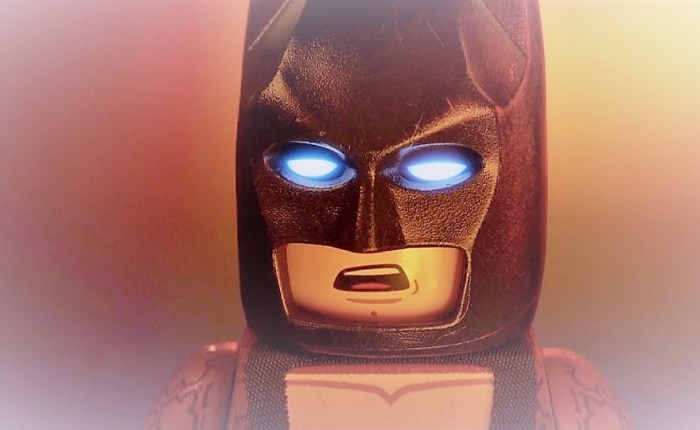
The Lego Batman Movie is a parody disguised as a standard children’s animation film.

It’s is so self-aware, it manages to deconstruct Batman at every level. Nothing is off limits. From Hans Zimmer’s tense action score from The Dark Knight Rises; Bruce Wayne’s backstory; Batman’s real world history; and the typical rules used in a superhero movie.

It pokes fun at all the failings of previous films. Too many villains over saturating the script: usually three bad guys will induce this effect. Lego Batman aims not for double figures, but triple. Bruce Wayne forever moping about and driven to dark places because he saw his parents killed. Lego Batman turns it into a comedy sketch.

Heath Ledger’s Joker summarising the unique relationship his character shared with The Caped Crusader (“I think you and I are destined to do this forever.”) becomes the drive for The Lego Batman Movie. Joker wants Batman to realise they are connected, that they need one another.

It’s great fun for the kids, Lego brick explosions everywhere, but the speed of the one liners indicate they have been written for the experienced Batman fan. And the embrace of the past, including the sixties TV version, goes beyond nostalgia or even paying homage.

If it weren’t for the child-friendly humour and tone, you could compare this to Team America: World Police. It knows what it is imitating so decides to have a good laugh with it.

In many ways, this means Will Arnett isn’t playing Bruce Wayne/Batman, because this isn’t really that character. It’s a shame for Joel Schumacher that the Lego Movie concept didn’t exist in 1997 when he gave the world Batman & Robin. It was his intention then to produce a Batman big screen outing for kids. He failed to impress children and adults alike, killing the franchise in the process.

The Lego Batman Movie shows how it can be done. When it’s clear from the off that all seriousness should be left in the cinema foyer, it doesn’t matter how colourful Gotham City is or how outlandish the story becomes. People can just sit back and enjoy.

With that freedom to do what they want with the property, Lego Batman manages to get a few more satirical scenes in under the radar. There’s a clear dig at Suicide Squad when Batman says getting bad guys to fight bad guys is stupid. And then, with a nod to that movie – and several other superhero flicks – the doomsday weapon of being invaded by another realm enters the fray.

It’s not here to comply with the structure of grown-up superhero films, it’s to point out how preposterous the notion is.

Even the happy ending is tongue-in-cheek. With it, The Dark Knight becomes a light comedy genius. Whether the DC Extended Universe is a success or not (and it hangs in the balance), Warner Bros. can always fall back on a Lego version of events and bring a bit of laughter, and a lot of revenue, into the boardroom.

Lego Batman isn’t the hero you deserve, but it’s the one you need right now.