Pep Guardiola’s arrival in England was surrounded by expectation and hyperbole from both rivals and supporters of Manchester City. Weighed down by an enviable record of success and a ready-made list of issues for detractors. For every achievement, a negative take. For every possibility, a reason why it couldn’t work. Not with the style of the Premier League. Not with the way we do things in this country.
It’s easy to forget now how the naysayers swelled in numbers by the end of his first season at City. Some of the most vocal wore sky blue and became ever more nostalgic for more recent managers. There was a vibe that Bobby Manc got City in a way Pep couldn’t. He was too stubborn. His brand of football couldn’t work in the Premier League. Third place and some telling defeats. Replacing the much-loved Joe Hart with Claudio Bravo because the new ‘keeper could play out from the back. Unfortunately, he spent too much time retrieving the ball from the back of his net. Hart had been offered to stay on, develop, but knew the writing was on the wall.
What no one appreciated – and it was demonstrated many times with multiple players – it takes time for people to adapt to Pep’s method. To understand what he needs. To implement the change and grow into it. Season one was not a mini-failure, it was an excavation. Discovering the elements that he could use for the new football he was bringing.
Any style of football can be called out in a reductive fashion. To say City played with a high line and were always vulnerable, that playing out from the back was risky and boring, is an oversimplification. It misses the minutiae that goes on to make Treble Winners, Centurions, Four-in-a-Row Titles, and twenty trophies in ten years.
But people can be forgiven for losing faith and after the first year in the Premier League, the voices claiming his style wouldn’t work in England started to sound more plausible. Or at the very least, they may have had a point. What those people didn’t appreciate was the Guardiola process. His method. The immediate understanding and absorption of information, the meticulous attention to all possible solutions, the never-ending crafting of the final product. It takes players time to get on Pep’s wavelength.
Notably more players left the Etihad in his first season than were recruited. Of those, only John Stones and İlkay Gündogan had notable sustained careers. Both became better players under Pep’s instruction.
The second season was a concentrated net spend of £200M. Ederson erased the Bravo blot on Pep’s record. Benjamin Mendy and Kyle Walker solved the full back issue. The now irreplaceable Bernardo Silva joined Mendy from Monaco (thankfully, he didn’t join him at parties) and the students from the previous season saw all the pieces fall into place.
How do you silence the naysayers from twelve months previous?
Become The Centurions.
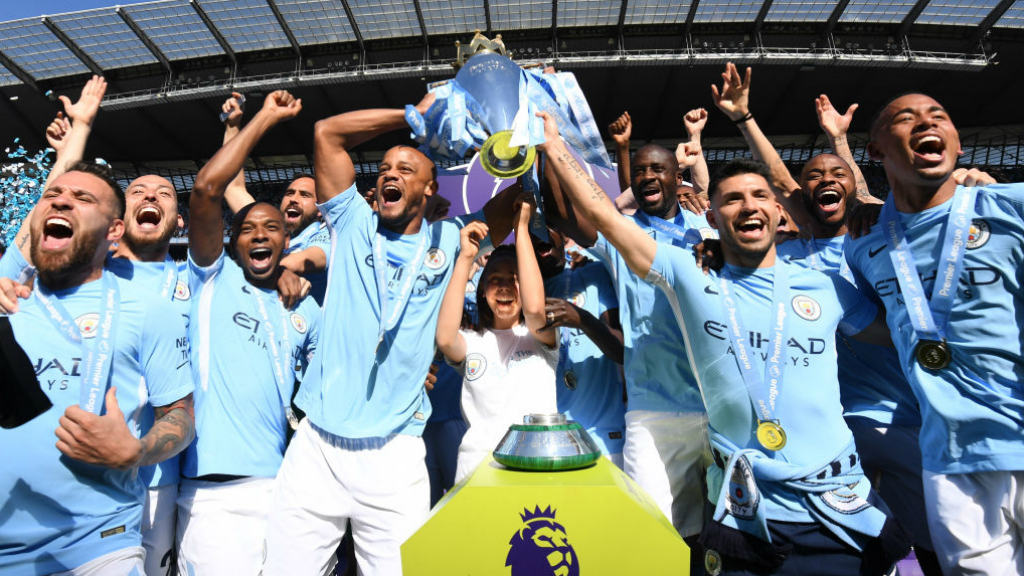
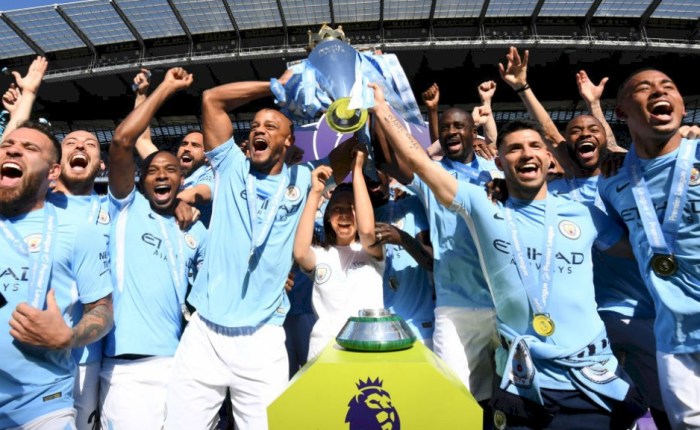
Suddenly no one was mocking about being “tippy tappy”. It wasn’t boring. 100 points in a single season can never be understated. Nor can 106 league goals. It was proof that Guardiola’s philosophy could work on these shores. And with it, a seed was planted. Where there was once doubt, there were open minds.
As the (full) saying goes: Imitation is the sincerest form of flattery that mediocrity can pay to greatness.
Slowly at first – then so quickly teams from League Two to Sunday League were trying it – everyone was trying to play from the back. High defensive lines were okay. Goalkeepers, even Dave from the Dog and Duck, were being turned into ball playing sweeper-keepers. With varying degrees of success.
The greatest teams of all time never exist in isolation. To raise levels, you need a worthy opponent. Someone who appears relentless in their pursuit as you stand on top of the mountain. One iteration of Pep’s City teams is the best Premier League side of all time. The debate is which team from which season. This wouldn’t be the case without Klopp’s Liverpool.
The Merseyside club under the German raised the bar higher than had been seen before in England. Jürgen’s Heavy Metal Football was seen as the antidote to Pep’s patient possession. They hit 97 points in the 2018-19 season. Good enough to win the league any normal year.
Except, Liverpool were up against a team that was anything but ordinary. City won the final fourteen league games, finishing on 98 points. It revealed the resilience and ruthlessness that was installed into the club’s DNA. This became the new Typical City.
Not before a reset was required.
In his first three seasons, Pep could be seen as a Missionary for his style of play. The Centurions and the run-in with Liverpool delivered his gospel. What followed were the years where he became a true controller. His previous managerial stints had been short in nature. After finishing a point above Liverpool, he surrendered the title to Klopp the following year.
It was a true transitional phase. Not just the loss of Vincent Kompany – immortalised forever, signing off with the goal against Leicester the previous season – but David Silva’s last year in a City shirt. Cancelo was recruited and so was a player called Rodri.
It was the year Covid changed the world and football didn’t escape. One where the sharp focus on City in the Champions League was harsher than ever. If you can’t fairly criticise what Guardiola has achieved, the only avenue left is to remind everyone what he hasn’t done. The defeat to Lyon – a Champions League game played over one leg because of Covid – drove the new narrative: he’s too clever for his own good.
But equally, because of the league performance, not that clever because he’d been worked out. This time, his style wouldn’t work in England. Yeah, yeah, people jumped the gun after the first season and called it too early. Then there was The Centurions and pipping Liverpool. But this time, really, no doubts: Pep was cooked and out of his depth.
So he went on to win four Premier League titles in a row. An accomplishment never seen before in England.
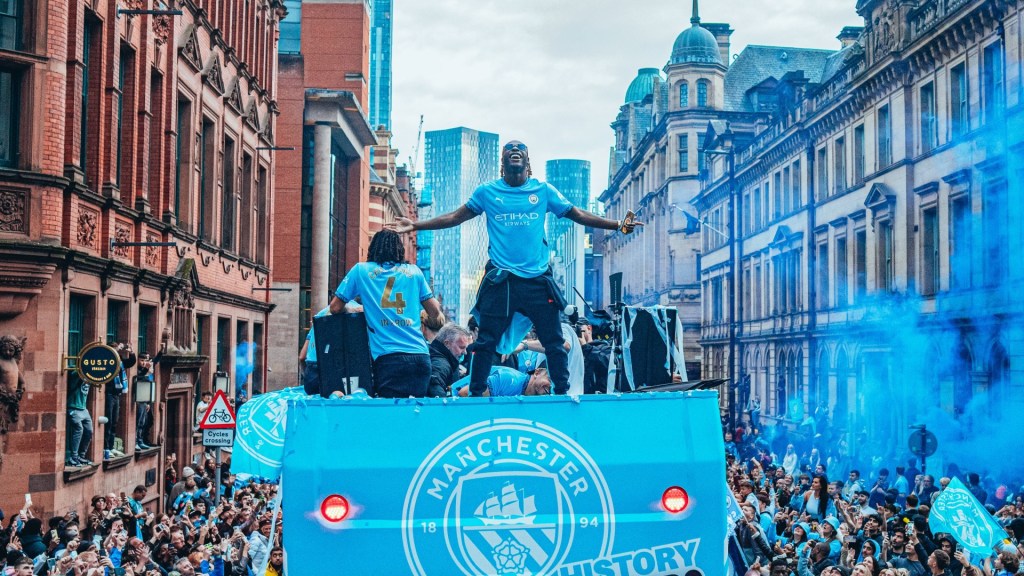
Transition became a state of permanent flux. If anyone thought they could solve Pep, he was already dreaming up the next system. He’s playing 4D chess while everyone else is learning tic-tac-toe.
Managers who thought they knew City patterns were faced with a colder machine. When it looked like City desperately required a striker, Pep won the league with a false 9. People spending time working out that conundrum looked up to see the most un-Pep player in Erling Haaland sign with the club. Suddenly, City are more direct.
The Missionary became The Great Adapter.
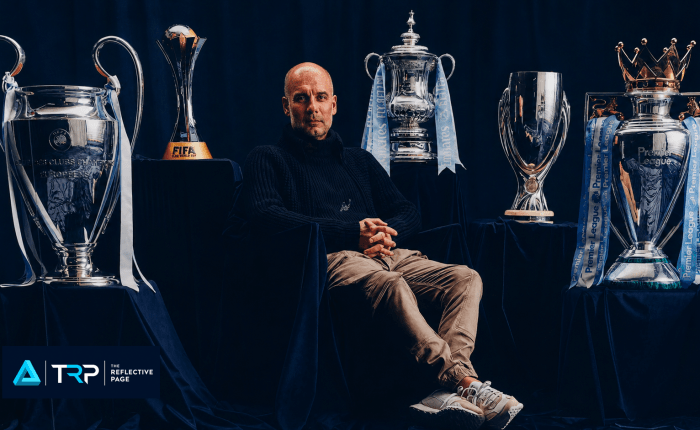
He picked up a domestic treble in the process — first English club to do so. The Holy Grail of the Champions League was secured — as part of a Premier League and FA Cup treble. It makes City the only English side to win the Continental Treble (Premier League, FA Cup, and European Cup) as the reigning champions of England. A FIFA Club World Cup, a Super Cup, what felt like an annual League Cup. The trophies became synonymous with the pairing of Pep and City.
Kevin De Bruyne became arguably the best in the world as he peaked. Rodri recognised as such when he won the Ballon d’Or.
Those who said Pep’s football was boring when he arrived, were now just bored of watching him dominate English football.
When it’s hard to argue with the results, detractors have turned to the low-hanging fruit. The most obvious being the financial spend, which neatly leads them to the 115 charges. The Covid season saw City initially found guilty by UEFA and subsequently cleared by the Court of Arbitration for Sport.
Yes, there’s no doubt Pep has spent money when required.
It didn’t seem such a sin when Alex Ferguson signed Rio Ferdinand for £29.1M in 2002. Adjusted using CPI, that’s about £61.5M – but – football stands outside of regular inflation. The TV deal for the Premier League during that cycle was £1BN over three seasons. The clubs currently share a £6.7BN pot. Marc-Israel Guéhi seems like a real bargain.
Buying the league was romanticised when Jack Walker did it for Blackburn Rovers. The Eighties saw the decade start with Robson going to United for £1.5M and surging to £2.8M when Liverpool re-signed Ian Rush. Chris Waddle was sold to Marseille for £4.25M in 1989.
Going all the way back to 1905, Alf Common was signed for £1,000 — the first four-figure transfer fee. Aptly named because spending money in football has always been common. The results do vary wildly.
In the last five years, Manchester United’s net spend of £684.61M is the highest in the Premier League. Newly crowned champions Arsenal are second with £675.77M. Man City are down in seventh with £397.78M.
You need money for success, but money doesn’t guarantee success.
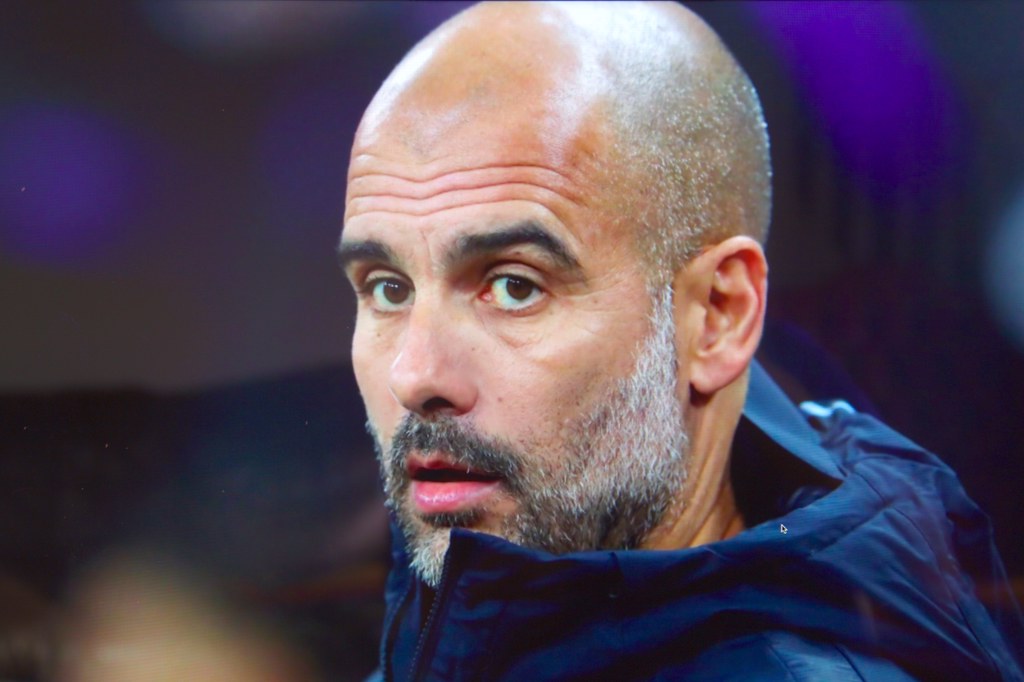
This is why the mudslinging isn’t reserved just for Pep’s transfer activity. The outstanding 115+ charges remain the default position for all detractors. Never have so many people been experts on a topic they’ve no insight into or sound understanding of. Regardless of the outcome, the club – and managers and players by association – will never be given due credit.
None of the negativity can change the argument about Guardiola’s influence. Children are now trained differently because of his arrival. Every level of the football pyramid has altered its play style because of one man’s vision and application. In his leaving statement, Pep spoke more elegantly and poetically than anything this writer can create for such a great man.
He gets Manchester and Manchester loves him. And his truth sits in plain sight when he speaks about the area. Mentioning the Industrial Revolution, and a city built from graft, it becomes the perfect summary for his time at the club. He has spearheaded a football revolution. It required hard work. The result is like the colour of the bricks he mentions — imperfect but resilient. Everything is the product of a massive progression forward. The results not always pretty but authentic and worthwhile.
He changed how a country views its national sport.
Guardiola arrived as a football missionary. He leaves a man changed by England, but not nearly as much as England was changed by him.