The Selective Ethics of Team GB’s Fans

The Selective Ethics of Team GB’s Fans

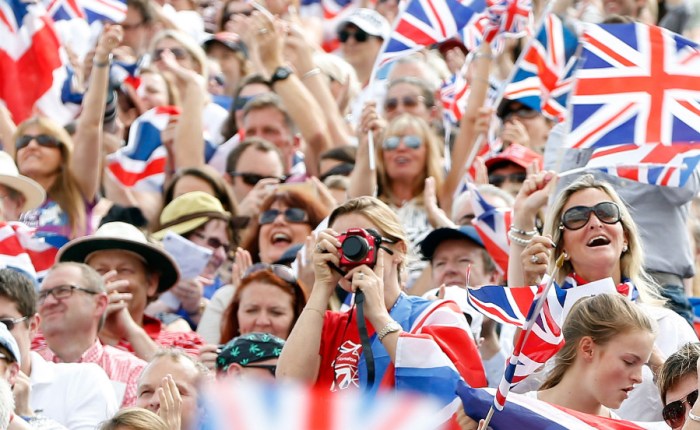
The excitement, euphoria and sense of patriotism which had subsided following Team GB’s success in Rio, will no doubt get a shot in the arm following today’s Olympic parade in Manchester. But enough time has passed since the final medal was placed over an athlete’s head to examine the cost of finishing second in the medal table. Not just the financial implications but the moral bill supporters must front.

The largest element of hypocrisy is the amount of funding Team GB received, yet their supporters have conveniently ignored this. The same people that bemoan the amount of cash in major sports, such as football, F1 and boxing.

When teams win the Premier League (Leicester aside) the usual implication is they bought the title. The winner of the F1 drivers’ championship is labelled as only doing so because he had the fastest car, and that comes from being at one of the richest teams. Normally every sporting achievement has a negative campaign about the finances involved.

Sometimes this is healthy. It highlights inequality surrounding the distribution of wealth within certain competitions. It makes governing bodies accountable and fights the corner of the paying public. Those at grass roots or lower tiers of sports are given a voice, helping raise cash for their survival.

But little has been made of Team Gb’s £275m funding.

Obviously it is important to invest in the future of sport, and the fruits of the cash injection have been clear for all to see during the last two Olympic games. But there is a forced ignorance taking place which means no one is questioning the level of spending or the moral implications.

The Olympics has moved away from the wholesome meet that sees raw athleticism take precedent over large commercial sport. The IOC can be thanked for this. They are the Olympics version of FIFA. Just another “non-profit” organisation that saw the marketing revenue for Rio exceed $9 billion. Television alone accounted for $4.1 billion of the IOC’s revenue.

Money is inextricably linked to top level sport. It is inescapable that if there’s a public interest, large companies will exploit the revenue potential. It would be foolish to believe the Olympics is any different than the NBA, NFL or the Premier League.

Like those global juggernauts, if you want to be successful, you need to spend big. And Team GB was bankrolled as if owned by oil made billionaires. Except the funding came from the tax payer and Lottery money. Most won’t complain about cash being siphoned away for sport but most won’t have examined where it’s gone.

£5.7m for a badminton bronze sounds excessive. If that doesn’t bother you, perhaps £6.9m for the modern pentathlon and its zero medal haul will have you pondering the cost of blind investment. Rowing did bring three gold medals but at a cost of £32m.

Of course, investment always enables better infrastructure but the sense Team GB bought their second place on the medal table permeates the mood when talking to rival nations. That could be sour grapes, but only the sort of comment people here make when discussing other sports. Sports that are self-sustaining and viewed consistently by millions. Despite the £14m investment, how many people will actually watch a gymnastics meet before the next Olympics?

This isn’t sporting legacy, it’s a fleeting fascination that comes around every four years. It was an expensive hit for a short high.

The moral high ground has many spots. As well as bemoaning the money in other sports, people are also quick to pass judgement on other nations when there’s a suspicion of wrong doing. The world revelled and condemned all Russian athletes when evidence of state-sponsored doping came to light.

Without a thorough investigation it was deemed appropriate to label all their athletes guilty until proven innocent. The calls for transparency were loud and clear.

Those calls have become barely audible whispers since Sir Bradley Wiggins’s use of TUEs has been leaked by Russian based hackers. There’s no suggestion he has done anything illegal, but how many people are genuinely comfortable with the notion the rules can be – and have been – bent to enhance the chances of success?

Those involved in the Russian witch-hunt should now be working tirelessly to clear the murky waters surrounding TUEs.

But the games come around every four years and as long as Team GB is successful the hunger to question the processes in place, whether it be funding or medical exemptions, will be virtually non-existent.

Formula One for All

Formula One for All

It’s a long held dream that sport can unite everyone on the planet. The FIFA World Cup breaks down barriers faster than men sitting at a negotiating table. The Olympics brings all the nations together with flag parades. Casual observers then become hooked on sports they usually have zero interest in. Unity makes these lesser reported events suddenly important.

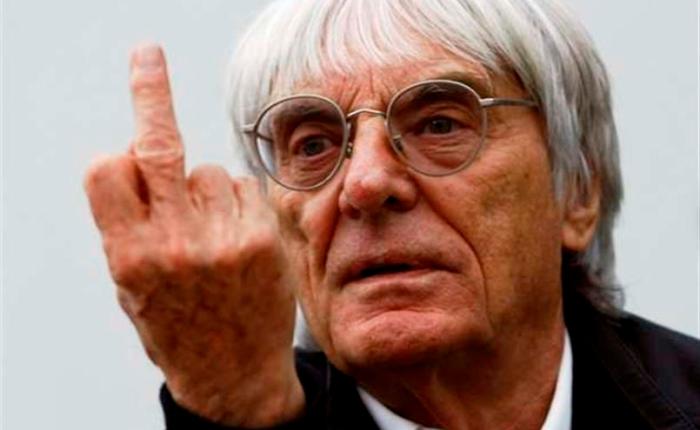
And we have F1. A powerful advert for a connected world. The pinnacle of motorsport that travels the globe. A sport for everyone . . . everyone that fits into Bernie Ecclestone’s world view, that is.

The problem with universal sports is they will eventually cross party lines and some will attempt to use them as a tool for their own gain. It is at times like this sport should first be protected, then take a subtle step back. It is a permanent position that can’t be altered when it suits decision makers within that sport. When they voluntarily alter these rules they become as bad as the exterior forces trying to gain leverage by foul means.

In 2012 F1 came under severe scrutiny over the Bahrain Grand Prix. The previous year had seen it cancelled twice due to civil unrest and when it was announced the following season human rights activists called for it to be removed once again. It wasn’t. Bernie Ecclestone said at the time: “I don’t think sport should be involved in politics. When any sport goes into a country, they respect the laws of the country whatever they are.”

On the face of it this is a valid stance to take. Sport should only be used for good, not to thrust ideals on emerging nations. However, human rights should be free from political boundaries and ignoring them to facilitate a multi-million-dollar sport does feel inappropriate. F1 should take note how FIFA have struggled on this front (Qatar! What about Brazil?)

Bernie’s problem with Bahrain was quickly overlooked. This would have been fine if the man in charge of Formula One Management stuck to his own mandate. But Bernie’s biggest problem is his mouth and the ignorant brain it is connected to.

For a man that believes politics have no place in sport, it seems strange he thinks it is fine to make this comment about Vladimir Putin: “He’s the guy who should run Europe.” He added that he didn’t like democracy because not much got done.

The problem he has here isn’t with democracy, but the fact the teams are trying their best to prevent him continuing his reign as sport’s dictator. There’s no suggestion they want to oust him but they are standing firmer on new agreements. Jenson Button recently put the idea forward that Ross Brawn would be a great rule maker for the sport.

It’s a sentiment echoed by Red Bull boss Christian Horner and undoubtedly countless others would join the cause if Brawn showed an interest. Of course, a rule maker superseding the FIA’s view wouldn’t stop Bernie’s commercial arm entirely but it would make him slightly (more) impotent.

So the hypocrisy of Ecclestone’s claims that sport should be free from politics is multifaceted. On one hand we are told politics have no place while he parades with foreign leaders, claiming they should be ruling continents and the current political system in place in those opposing areas is fundamentally flawed.

Within the sport there is no such thing as negotiation or compromise. It is about how much power he can exert on the teams making him richer by the second. Sport is used as a symbol to join people together, to transcend class and gender. Yet he sees the rich and the poor on his own grid.

He makes outlandish comments that women are unable to compete with men. He says men will not take them seriously. This is only true if the men in question are chauvinistic or only interested in self-gain, things Ecclestone can relate to. He claims they are not physically able to drive a Formula One car.

In doing so he completely ignores the achievements of Susie Wolff, how she proved modern F1 cars are fine in the hands of a female. He is ignorant of women in American motorsport. Pippa Mann has completed four Indy 500s. Most famous of all is Danica Patrick. She has 115 Indy Car races to her name and is currently in NASCAR.

To say all women are incapable based on perceived body strength and stamina is ludicrous. There are women out there that easily exceed their male counterparts. It’s a sexist view that should have been buried decades ago.

It continues to be given life when ignorant little men with lots of money hold positions of power for too long.
Formula One is for everyone, like all good sport should be.

Bernie Ecclestone continues to prove he is out of touch with the world, the time we live in, and the sport he represents.

Backs to UEFA

Backs to UEFA

After another round of Champions League fixtures we once again find criticism directed toward UEFA. My own contempt for the corrupt and hypocritical organisation is well noted. Now some Manchester City fans are canvassing for supporters to turn their backs during the Champions League anthem at the next three European games. Whilst I support any movement against UEFA and their ideology, City fans have to be clear on the reasons why they are turning their backs, and why they are choosing to do it now.

Every time I have written about Financial Fair Play the strong undercurrent has been a dislike toward UEFA. That particular system is anything but fair, they weren’t acting as caring overseers, the system wouldn’t even have prevented a Leeds or Portsmouth situation. It reeked of corruption, ensuring the status quo in football for the European “Big Boys.” They traversed the boundaries of sport and business, failing to ensure clarity or complete legality with either.

When they issued fines, this captured cash wasn’t distributed into grass root schemes, struggling lower league clubs, or even charities. It was fed back to the compliant clubs playing at the top European level. They should have already been filtering money from their vast profits, across all of Europe, to the smaller clubs that facilitate emerging players within the lower leagues. Instead of being a benevolent group they have edged ever closer to a Fascist regime bordering on evil Totalitarianism. They dangle high prize money for their premier competition whilst threatening handcuffs for those that can compete with healthy cash.

It’s only now, after the event and sanctions imposed on Manchester City and PSG, that UEFA have even considered clubs, such as Manchester United, facing questions over loans that form part of their finances. These help highlight that UEFA doesn’t care about fairness. In a democracy, argument and counter-argument are heard equally, then an agreed system is formed. UEFA rule with an iron-fist. Bully and ignore as they please. If they cared about the health of the sport, of the people within the game, they wouldn’t have allowed Poland and Ukraine to spend billions to host the European championships, then face ruin. There should be a moral obligation to protect clubs or national associations from such grotesque overspend. But as long as UEFA are dangling the carrot they’re hardly likely to tire of the tease.

It’s ruling with such an iron-fist which makes remarks made after the “behind closed doors” CSKA Moscow v Manchester City Champions League tie, all the more ridiculous. CSKA were the ones facing a punishment for racist behaviour. Yet, on the night, they somehow had around 600 fans in the stadium. As City captain Vincent Kompany asked: “You say no fans, all of a sudden you turn up and the team that has no fans is Man City. So who’s getting punished? Who’s being done for racism, Man City or Moscow?”

MCFC Mos

It’s almost a rhetorical question. Clearly the punishment also affected Manchester City, perhaps to a greater degree. I am not suggesting, nor is anyone associated with the club even as they launch a complaint, that the Moscow fans swayed the match. But the principle of the matter is what makes it note worthy. It’s almost a sick joke when UEFA claim there was no breach. That club delegations, media, security staff, UEFA and guests of sponsorship partners are allowed into behind closed door matches. It’s that last one on the list that tells the story: Sponsorship Partners. Greedy UEFA. Always money over morals.

They claim they can’t dictate who those guests are. They make the rules and shirk the responsibility all too often. If UEFA stated only people in pink shirts could enter, guess what, we’d all be wearing pink shirts or face being ejected from our seats. They obviously need clubs, media and security there. But they could have prevented guests of sponsors. They may have lost some cash, but is money from one game’s set of guests more important than a solid stance against racism?

UEFA No racism

To UEFA it probably is. This is an organisation that threatened action against players if they walked from the field of play during racist chants, then applauded that action when the world supported AC Milan for doing just that. They are so out of touch with public opinion and common decency that their judgement can no longer be trusted. City shouldn’t have been playing that came in Moscow in front of 600 CSKA fans. It should have been in a neutral country’s stadium filled to the rafters with Blues.  But they don’t really care about racism, half the time they come across as if the subject is an awkward annoyance to them; and they don’t care about Manchester City, we’re like the one-legged ginger step-child that needs glasses.

So as a City fan (I also happen to have been a step-child, ginger, and a wearer of spectacles) we face the decision to turn our backs when UEFA play their anthem. I agree with the sentiment. The debacle in Russia is the straw that has broken the camel’s back for many a Blue. However, I’m worried it puts City fans on dangerous ground. Surely the time for a stance against UEFA was at the first Champions League game. The droplets of faeces we’ve had on us this week are just spray from a larger, on-going, shower.

To make a stand now we risk looking bitter. That our disappointing result is more to do with the turning of backs than UEFA’s actions. Too much focus is placed on the Champions League. For me the measure of a team’s greatness is domestic success. When both Liverpool and Chelsea last claimed UEFA’s top prize they failed to secure a top four finish at home. However, the world sees it different. City’s owners see it different. Had City already secured a Champions League trophy, a stand against UEFA would hold much more weight. Instead there’s a risk our positive defiance will be pushed away with nonchalance.

MCFC Backs UEFA

Over the coming weeks we need to articulate all our grievances regarding UEFA to prevent our protest appearing two-faced. At the moment UEFA stand unopposed, everyone is bending to their rules, the rules bending further to support the evil regime. If people do take notice we need to have a clear message: That UEFA needs to change or be replaced entirely.