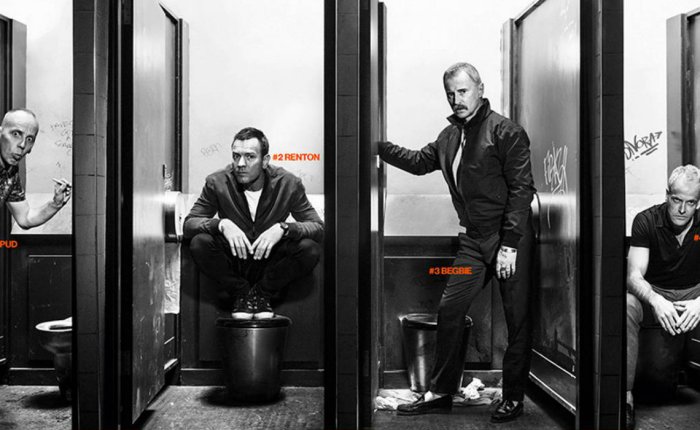
T2: Trainspotting Judgement Day

T2: Trainspotting Judgement Day

Let’s face it, Danny Boyle doesn’t make bad movies. Every single one that his name has been attached to has been worthy of your time and deserved any success that came its way. It was his second as director, Trainspotting, that sent him on a roll. Its momentum helped create a career in Hollywood most modern movie makers can’t begin to rival. 2017 is the year he returns to the setting of a timeless piece of cinema.

In a perfect world, my first novel will be adapted by Boyle and Manchester would have its iconic movie (we did grow up on the same streets, so it’s not that far-fetched). It’s the dream choice because Boyle understands the drive of a story, then delivers a visual experience that goes beyond the vision of its creator. Irvine Welsh is a talented author, no doubt, but Trainspotting elevated his novel to heights he couldn’t have envisioned.

That was aided by the John Hodge screenplay and determination of producer Andrew Macdonald. Back in the nineties it was Boyle that had to convince Welsh a movie was a good idea. Years later it is the director in the hot seat calling the shots but it’s warming to know he wanted to make a sequel. It is something he actively sought, waiting merely for the actors to age accordingly.

The stars have aligned (and reassembled) to bring back the core characters from the original. Ewan McGregor’s “Rent Boy” has been missing for twenty years, as expected after stealing £16,000 from madman Begbie. Robert Carlyle was a scene stealer back in the first film (remember that glass chucking moment?) and his new Begbie is just as intense. But back then it was mindless, after twenty years in prison, it’s pure focus.

He escapes, and the lack of police follow-up is something we will just have to accept, and attempts to resume life. It’s here we get some laughs. Trainspotting was a black comedy at times, the laughs here are lighter and directly played for.

Sick Boy, or Simon, is now putting more coke up his nose than Renton put heroin in his arms first time around. He’s trying to run scams and wants to open a brothel to keep his girlfriend happy. Yep, the Edinburgh they inhabit still has its murky sides.

Ewen Bremner’s Spud is the final member of the quartet and plays a larger role than last time. He is still a heroin addict, estranged from his partner and child and is suicidal. The unexpected arrival of Renton gives his life a new direction.

For a time, the movie’s direction, while new, isn’t ground-breaking. It openly reminisces over famous scenes from the original. This trip down memory lane would be pure nostalgia in the hands of any other movie maker, and would be crude self-awareness – not unlike the last series of This Is England – if it weren’t for Boyle’s ability to bottle a mood a make everything feel fresh.

This talent is aided by a cast better equipped to deliver the vision this time around. They have all grown as actors. What the script lacks in depth, they fill out with more meaningful performances.

There was no point trying to replicate Trainspotting, that time has passed, the characters inhabit different bodies. But it would be soulless not to have them look back at key events after being separated for two decades. The soundtrack aides this natural introspection with a hint of familiar themes with new vibes laid over.

There are times the suspension of disbelief is stretched as coincidences and situations appear to drive us to a forced conclusion. That’s a nod to the power of the first film, perhaps there was no real story to tell after that one? But that’s not to say it is poor, far from it. Certain Boyle hallmarks displayed in Trance, and novel use of lighting in the finale, give this film the contemporary nod that separates if from its grimy predecessor.

Easily a four-star film, maybe as it settles it’ll take its place alongside the first. And in a few decades’ time, there’ll be no complaints if Boyle wants to visit these characters again.

Movie of 2016: Room

Movie of 2016: Room

Okay, technically this did get a late 2015 release. However, here in the United Kingdom it was a January film so that’s good enough for me to view it as a movie from 2016. Coupled with its inclusion in this year’s Academy Awards, it has a valid enough reason to be as classed a movie from the last twelve months. But why the best?

After a whole year, to drag a film back from the previous December speaks volumes for its impact. It should be a story that is too grim to place the spotlight on. Even if executed well, it should have been put on a shelf and been everyone’s sad but buried movie. Well, it wasn’t shot, written and performed well – it was almost perfect.

Emma Donoghue took her 2010 novel and turned it into a screenplay before the book’s actual release. It’s a great example of allowing the author to nurture their work to the big screen. The result is clear to see. Profound, in fact. Who else could have added the required layers to the characters from the page?

This may sound strange, the idea of an adaptation adding to the written word, but leading star and Oscar winner for her performance in the film, Brie Larson, explained in an interview it was after seeing the script, and realising her character’s role had greater depth than the Joy portrayed in the book, that she had no doubts about joining the project.

She worked under director Lenny Abrahamson to tell the story of a young woman who had been abducted years before and kept hidden in a small outhouse. It forms the “room” for the first part of the story. Trapped with her is Jack, played by Jacob Tremblay, her five-year-old son, a product of the repeated rapes by her captor.

Jack has never seen beyond the room. His perceptions of the world are from Joy’s teachings, she has told Jack the world is just their space. Everything on the television is make believe. The world has shrunk to the size of that room, to just one another. It’s part coping mechanism, part defensive measure.

Joy ensures Jack is kept locked in the cupboard during the nightly visits from “Old Nick” (their jailor). The author confirmed the naming is a nod to the old Christian term for the devil; Joy and Jack are unaware of his actual name.

After an impromptu meet between “Old Nick” and Jack, Joy decides she needs to get her son out of the room and reveals that a wider world does exist. What follows is nerve-wracking and heart-breaking. It shows the best and worst of humanity in close proximity and quick succession.

It’s no spoiler to say the movie moves on beyond the room, where mother and son have to adapt to a new world.

Larson has already been awarded for her role but she should cut that Oscar in half and send it to Jacob Tremblay. Watching him become familiar with the world while expressing the bond with his mother is something magical.

Before shooting, Lenny Abrahamson got the two actors together on social dates to see if there was a connection that could be caught on camera. He must have felt like he’d hit the jackpot. Tremblay said in an interview he was so friendly with Brie in real life he found he couldn’t shout at her in one scene. That true friendship is the backbone for what comes across as an unbreakable bond.

The world Joy and Jack find themselves in after the room has more traps than before and is a struggle for the pair. The pieces of a broken family, confused relatives, a relentless media, to name a few. But a film that spends so long pulling on heart-strings before breaking them, is also inspiring. The expression of true love overcoming all evil.

From the darkest nature of man, two people of pure goodness emerge.

Usually it’s best to read the novel first then view the film with a critical eye, adding the obvious line: the book’s always better. In this case a complete reversal works: after watching the movie, it’s unfathomable that the written word can prove to be more emotive.

It’s understandable people will draw parallels or conclusions to real-world stories that have similar points but these are always portrayed as horrors in the media. This story shows us the central points between the two victims involved and despite all that they endure, a real feeling of hope becomes the fabric of their tale.

Sometimes, the only thing that a person needs in an entire world is just one person to love them. Brie Larson and Jacob Tremblay have expressed this better than anyone has previously managed on film.

Don’t Brother Me

Don’t Brother Me

The release of Supersonic on Blu-ray allows fans of Oasis to once again marvel at the band’s high points and the tumultuous relationship between brothers Liam and Noel Gallagher. It’s hard not to crave a reunion when served such a nostalgia feast, accentuated by Liam’s own cries. But the film gives away enough in the way of clues as to why it won’t be anytime soon.

The insight provided is a unique peek behind the curtain of the greatest band of their generation, and potentially, the last truly organic super-band. It’s a privilege for the viewer to see Liam, Noel, Bonehead, Guigsy and Tony McCarroll filmed before the fame arrived, then follow them as they ride the wave.

What comes across is how, in essence, the zone they got into when playing sessions at the start of the documentary is the mental state they took on when inside the music at Knebworth. This isn’t a slight – quite the opposite – it’s a nod to the feel they had for the music. And the belief they had in themselves.

It wasn’t even driven by desperation. Noel is heard explaining how when he was a sound technician for the Inspiral Carpets, he thought: This’ll do for me.

Upon his return from that job (he was fired) he heard Liam play in the first version of Oasis. At first the band asked Noel to be their manager. He refused. Then he was offered a role as guitarist, aware he had song writing abilities. He duly accepted and the slow journey began.

By their own admission, they weren’t getting bad reviews, they weren’t getting spoken about at all. There’s flying under the radar before discovery, then there’s the sort of stealth that makes one wonder if they were flying at all.

Then came a chance gig in Glasgow, which they got by sharing a rehearsal room with all-girl band, Sister Lovers. Upon arrival at the King Tut’s Wah Wah Hut club the manager bluntly refused to add them to the night’s performances. It was only when the Sister Lovers said they wouldn’t play if Oasis were refused, and eventually cut the length of their set to accommodate, that Oasis took to the stage.

As if the fates had been in play the whole time, they were noticed by Creation Records’ Alan McGee, there for one of his own bands, and the path to destiny became clearer to see. They didn’t celebrate that night, they just believed it was meant to be.

This sort of feeling, that it’s just life falling into place, goes someway to explain why they appeared to flirt with implosion at every turn. They weren’t chasing a dream: they were living it.

What that meant did start to differ between Liam and Noel, and this is where the Oasis story becomes a tale between two brothers. Other members became collateral damage in the process. Tony McCarroll was removed as drummer after a final argument with Noel. The songwriter unconvinced he had the ability to perform the upcoming second album’s material.

He had a point. The recording sessions of Definitely Maybe were hindered by McCarroll’s struggle to play from one bar to the next. But the drummer had also become the whipping boy for the other members.

Guigsy also had a nervous meltdown, only to be recalled when his replacement seemed to dislike the pace of the band.

And what a pace.

It was there from the beginning. They never made their first overseas gig in Amsterdam because Liam joined the on-board chaos which result in immediate deportation and time in the ferry’s cells.

Noel wasn’t happy with this incident, Liam thrived on it. It attracted music hooligans; people started going to Oasis gigs for the rowdy atmosphere and the potential for a tussle. Liam became the ringleader, equating aggro and good music as the combination to greatness.

Perhaps that was something to do with his musical beginnings. He’d displayed no interest in music, even mocking his guitar playing brother, but after being hit on the head with a hammer a switch was activated. Afterwards he was all about buying records and dreaming of being a rock ‘n’ roll star. This meant never following rules.

As Liam explains himself: “I thought we were a rock band. Anything goes in Oasis. Some people have rules. Fuck the rules.”

Noel jokingly remarks that the lad who hammered the music into Liam has a lot to answer for.

It sets the polar opposites up for the definition of why today they have no relationship. Noel describes himself as the cat. Admitting he can also be another C word and a bastard. But he didn’t crave attention or need it. Liam was the playful dog whose wagging tail didn’t stop until he had gone too far.

Noel assumed the role of leader which created a power struggle that was always going to reduce the life of the band. But even this Liam trivialises with a story about how his brother’s still angry because he pissed on his stereo when they were younger.

Liam is the eternal jokester and master of the natural one-liner, everything about Noel is more calculated.

When recording songs at the rate of one a day for (What’s the Story) Morning Glory?, at times Noel would give Liam one run through on acoustic with vocals only just written, yet they’d be nailed first time, as if sharing some deeper telepathic link.

Some might say they should have stopped before the third album. That they’d peaked too early. The evidence provided in Supersonic: a failed American tour when they mistook crystal meth for cocaine, this off the back of an explosive Japanese experience, to still produce two generation defining albums amidst warring siblings, does seem warranted.

But as Liam says about stopping when you’ve reached the top: “Just cos you’ve kissed the sky, give it a love bite.”

That eagerness – the playful dog – will always want that buzz. Noel appears far removed from it nowadays. Post-cinema release of Supersonic it was Liam backing calls for a reunion, claiming in his mind, Oasis had never split-up.

His mantra in interviews was about his bags being packed and ready. But in each cry for reconciliation he reminded Noel why they no longer spoke. Each started with a plea, and ended in a dig.

But in the process, they reminded the fans why Liam was so engaging in the first place. In one to Sky News, he explained: “But there’ll be no cap in the hand and no banjo, you know what I mean? A little fucking skinny, stringy dog outside his house going ‘please sir, I need a fucking band, mate.’”

In another he said, “Our kid’s going around like I’ve stabbed his fucking cat.”

Amusing, and even Noel may raise a smile, but they also raise the unlikelihood of the reunion Liam himself once dismissed when he thought Beady Eye would fill the void. The grounds for angst are with the common perception of Noel.

Liam refers to him as “Man of the people” because Noel seems to have come out smelling of roses while Liam is seen as the bad guy. But many will vouch for the behind the scenes personalities. As disruptive as Liam may be (has been), there’s always been a frank honesty with him.

Noel is more guarded and plotting. It’s understandable the aggro lifestyle became tiresome but it wrangles his brother that the public image is a manufactured one, that the songwriter in Oasis became part of the machine they defied.

The bitterness can be seen in how he trolls Noel on Twitter.

With Beady Eye, he sang, “Don’t Brother Me.” Surely a message to Noel but that past forms a narrative with tweets like this from earlier in the year (before Supersonic was doing the media rounds):

It’s Liam’s contradictions and quick-to-fire attitude that will drive the wedge between the pair even deeper.

Noel explains it best: “Oasis’ greatest strength was me and Liam. It’s also what drove the band into the ground in the end.”

If the final chapter really has been written, what a great story it turned out to be, Supersonic a special snapshot so the band can “Live Forever.”