The Tyring Problem of F1

The Tyring Problem of F1

There is no doubt that Formula One is currently going through a difficult period in its long history. Smaller teams are struggling financially despite more money than ever being in the sport. Worldwide television audiences are in decline. And worst of all, the competition on track is far too predictable. In a desperate search for solutions even qualifying has seen a shake-up before reverting to its 2015 format. But there is an easier way to fix the problem on the track – and it’s a method we’ve seen before.

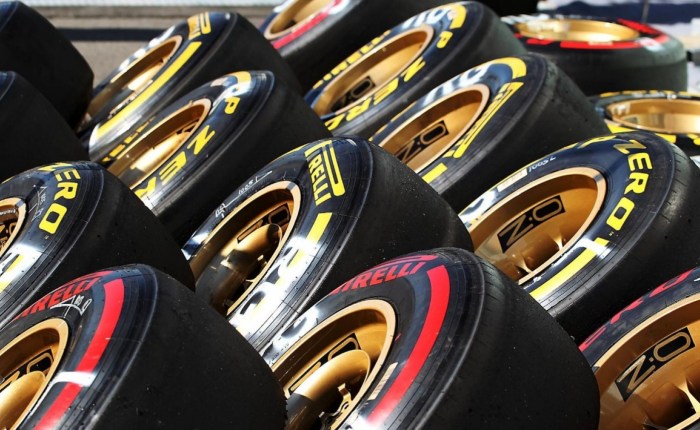
The reintroduction of multiple tyre manufacturers would be a game changer and an injection of sporting challenge that F1 needs. The negatives against are grossly outweighed now by the potential positives. The current drive to alter, or even deliberately randomise the grid, comes from a realisation that there is no way to reduce Mercedes’ vast advantage in a short space of time.

The recent regulation changes follow a long line of modifications that all had the intention to remove power from a dominant team’s design, only to fail in the long term as they make the corridor for experimentation smaller. Once a team like Mercedes, or Red Bull before them, crack the code, the other teams can only play catch-up. The problem is they are always two moves behind.

This is coupled with another downside to modern day F1 racing. Drivers are no longer flat out, lap-after-lap, trying to squeeze every last bit of life from the car. Instead, they have become micro-managers that worry about everything from tyre life, to gearbox wear and engine use.

A tyre war changes this.

No longer would drivers be nursing tyres through to pit stop windows. The suppliers would design tyres that encourage them to be driven hard while maintaining performance. Indeed, a tyre that fell off the cliff too soon, or was fractions of a second slower when being pushed hard compared to a rival brand, would be embarrassing for the company in question.

Those design corridors that have been getting smaller, suddenly open up to new interpretation. Certain tracks would suit one tyre manufacturer over another. Performance in one area heightened, thus, designers make sacrifices in certain downforce set-ups if over the season they see large gains elsewhere.

Suddenly the small strides Ferrari have made over the summer become leaps at one circuit, before the Williams has the fastest car for one weekend at a unique track, and so on. The desired grid shake-up would occur organically.

During a race, this unpredictability aside, we’d also see entirely different pit stop strategies. Rather than knowing all the cars that start on the same compound will pit roughly the same time, allowing for the undercut, we’d have cars on track racing with tyres in different stages of life and performance.

The main concern for a tyre war is cost. One supplier is seen as a way to ensure costs remain low. This is a false economy. F1 has finally embraced the idea of cost saving. It’s not like ten years ago (the last time there was multiple manufacturers) when the talk of budgeting was mere lip service.

The current in-season restriction on the number of test days prevents too many ancillary tyre costs. Also, at the moment teams are having to make their overall package work around Pirelli’s rubber. For some this will cost more than having the freedom to understand and maximise a tyre design to be pushed hard, in the knowledge the car can only have maximum effectivity on certain tracks.

It would be a good chance to reduce the penalties for gearbox and engine changes. Clearly this cost saving measure has merit but it doesn’t really work in its current form. Teams take the hit and still find themselves investing more than was expected. If a tyre war returns, all components would be pushed harder. The production should then be allowed to shift from finite life to maximum performance.

Remaining with the sole provider has been a commercial choice. It gives Bernie complete control over a company he can lean on and place under pressure. When Pirelli headed into a Monza GP with a Spa problem on their shoulder, the spectre of the 2005 US Grand Prix hung over the sport. They didn’t consider halting the race. Ecclestone won’t want people back around the negotiating table that could derail his spectacle – even if it means risking safety.

That’s the real money issue here. The danger to commercial interests. Despite the long term health of F1 looking bleak, decisions are continually made for the here-and-now. The rich teams continue to get richer, the small ones continue to have less. It seems only probable the rule makers would only allow a second tyre supplier if it gave away cheap, less effective rubber. This way they could claim to be offering a budgeted choice while ensuring favoured teams – like Ferrari – remain at the top of the pile.

Rather than admit defeat with the current car specifications in a few years’ time, the choice could be made now to terminate the Pirelli contract. This way the current design parameters can remain the same whilst their application gets a reboot.

In a technically complicated sport, sometimes the simplest choice is the most effective. Right now F1 is blessed with a promising generation of drivers and team’s dedicated to competing. It is being held back by monotony.

Breaking the new status quo doesn’t require cars with radical new shapes or ways to manipulate the starting grid.

Just change the boots and let the teams go racing. Drivers should be racers, not component fatigue life managers. Make the pinnacle of motorsport about flat-out driving once again. If they do, it will become less predictable.

It will become the product we pray for every race weekend.
Uncrowned King

Uncrowned King

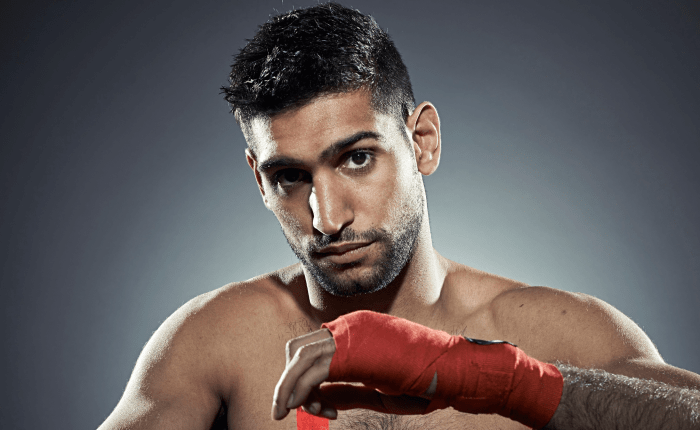
Fight fans were given an unexpected surprise when Amir Khan announced his next opponent as WBC Middleweight Champion, Saúl Álvarez. After months of domestic pressure to face IBF Welterweight Champion Kell Brook, Khan has pulled off a great coup securing a contest with the much-respected Mexican. Yet, he still faces a period of heavy criticism and a lack of respect instead of the support he deserves.

British boxing fans that dip in and out of the sport are hypocrites. They chastised Audley Harrison for being too cautious but denounce Khan because he gets caught now and again. He’s a warrior. One that goes into fights without any fear. They point out his “glass chin” by mentioning the Breidis Prescott fight from 2008.

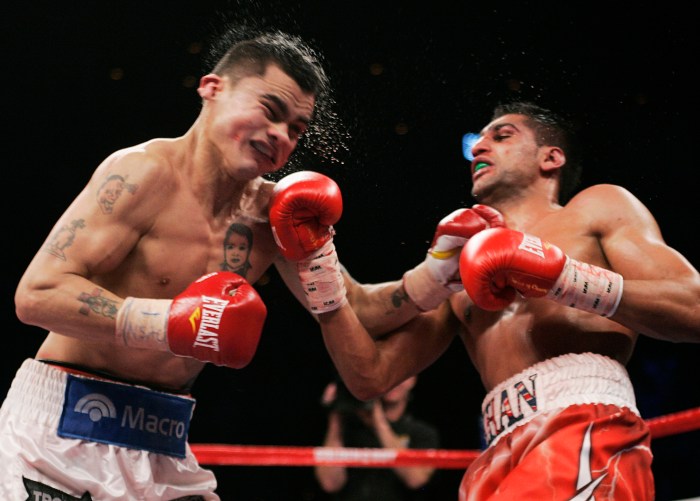
Really? That was nearly eight years ago. Since then he’s been in wars and stood tall after taking far more telling blows. Anyone that doubts this – more likely missed it altogether, while playing the role of fair-weather fan – should remember his historic battle with Marcos Maidana.

He took more punishment there than a boxer with a classic Achilles heel of a glass jaw could and survived for an impressive points victory. This is the same Maidana that fought Mayweather twice, the rematch coming after he caused such a stir in the first. When people were asked how could a boxer that failed against Khan fare so well against the best, they said the Argentine had grown as a fighter. This same consideration is never given to Khan.

He’s built harder and stronger than the young pro that was knocked out by Prescott in 2008. Over the years his neck muscles have strengthened so knockouts are no longer a given. That’s not to say he can’t go down but only Danny García has secured victory in that fashion since (four years after the Manchester knockout). Going up a weight does place him in danger of killer blows at a power he’s potentially not faced.

The biggest danger is losing his hand speed – his greatest gift and obvious advantage.

It is a risk worth taking, the big fight opportunities were dwindling. He was right to demand more money from a potential Kell Brook fight. Brook doesn’t have a long line of impressive names on his record and lacks drawing power across the pond. His most famous story is getting stabbed in the leg when holidaying in Tenerife. He’s just a cog in Eddie Hearn’s self-serving evil empire.

Brook’s never been on Mayweather’s radar like Khan, and with good reason.

Khan was a potential opponent for a fight with the greatest boxer of his generation on merit. And unlike most of Floyd’s challengers who are there for the payday, Khan wanted the fight for boxing purposes. He’s always playing high-stake poker with his career and legacy, this latest fight with “Canelo” an example.

While most fighters are carefully plotting a safe route to a decent legacy, Khan keeps rolling the dice, willing to take on any of the big names. A win here will see him get a fight with Manny Pacquiao, the consolation prize after missing out on Mayweather.

The British press and its fight fans would have you believe he was never good enough for the major Vegas showdown with Mayweather or somebody close to that stature. The truth is, Mayweather will have seen Khan as an unnecessary risk.

Khan is a volatile warrior that makes up for momentary blips regarding in-ring intelligence with brave assaults on his foe.

His critics will continue to mention Prescott and ignore how impressive he looked against Luis Collazo. The same people that blame the referee for costing Ricky Hatton during his showdown with Floyd Mayweather, never mention Khan’s treatment before, during and after the Lamont Peterson debacle. They will start to peddle Brook’s theory that Khan has taken an option with built-in excuses.

Amir goes into the fight as an underdog. This is a reasonable assessment. But the most underrated boxer in recent memory – and possibly most undervalued British fighter of all time – has a chance to undo years of misrepresentation by overcoming the odds and defeating the Mexican.

If he does, people will have to refrain from making excuses to dislike him and accept the reasons that make him a world class boxer.

Heavyweight Boxing Reboot

Heavyweight Boxing Reboot

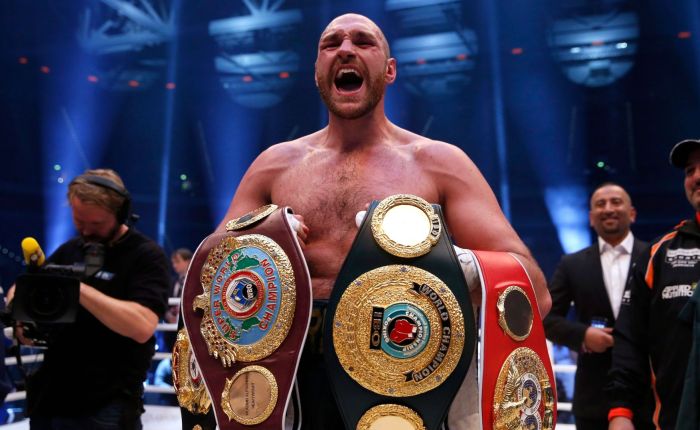
It is historically seen as the pinnacle of world boxing: The Heavyweight Division. Much of its splendour and glamour has been diminished after the tight and mundane grip of the Klitschko era. The unexpected victory of Tyson Fury over Wladimir has changed all this. Suddenly the division looks alive, led by the Brits with a good-talking American world champion in tow. Boxing at the top end just got a Hollywood style reboot.

It’s only right to start the reboot with the creator of its genesis: Tyson Fury. A man that’s easy to point derision at and still – even after his impressive upset – has questionable in-ring ability. He is very much a work in progress. The learning curve he’s set on may appear more like a straight line than a bend in trajectory, but evidence suggesting maturity has found its way into his mind-set was apparent during the second clash with Dereck Chisora.

Memories of being put on the canvas by Steve Cunningham (or giving himself an uppercut in the 2009 clash against Lee Swaby) gave genuine doubts over his ability to concentrate and stick to a game plan for an entire fight. In the November 2014 rematch with fellow Brit Chisora, he not only proved he can apply himself correctly for the entirety of a bout, he also put to bed claims that he was fortunate in the first meeting.

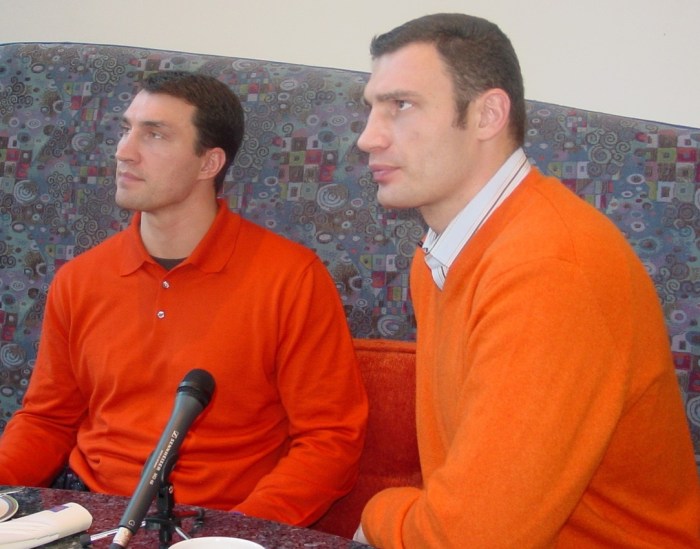
What made the second Chisora victory all the more impressive was how his opponent had come off the back of a credible performance against the older Klitschko, Vitali. In his prime, side-by-side with Wladimir, he was the better of the two brothers and the only man who truly beat him was the great Lennox Lewis.

Observers noted he was a Klitschko in decline but there was no way to quantify the drop-off, until we witnessed Chisora labour for ten rounds against Fury. It either meant Klitschko had been months past his best before date or Fury had come on by leaps and bounds. The truth was somewhere in the middle.

These two bouts (Klitschko/Chisora; Tyson/Chisora) did provide a handy snapshot heading into Fury’s world title bout with Wladimir. It showed us that a Klitschko doesn’t decline slowly, once they hit that wall the towel should be thrown in immediately. Dereck Chisora was the lucky man able to exploit this Achilles heel.

It gave Tyson Fury a tune-up fight against a boxer that had been savvy enough to go the distance with a Klitschko who was no longer at the top of his game. Their November clash was a chance for Fury to leave the theatrics at ringside and stick to a point-by-point plan. Having succeeded, he had a mental blueprint for how to conduct himself when in the ring with Wladimir.

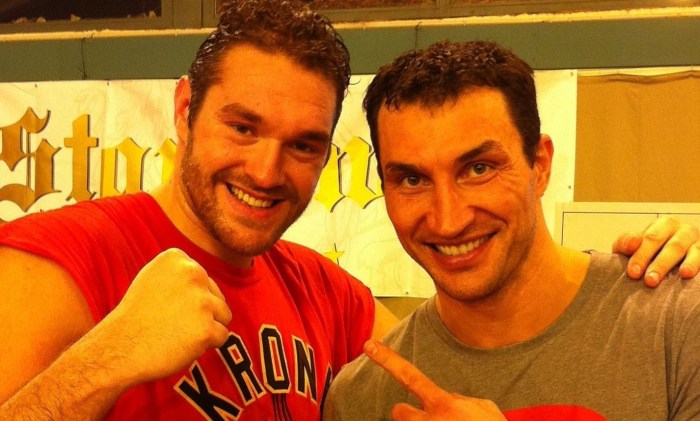
Hindsight, often described as 20/20, in this case is still somewhat blurred. Nothing can be taken away from Fury’s performance against the champion. He went into his backyard and left with all the gold. What isn’t clear is if it was just a bad day at the office for Wladimir, a sign the Klitschko drop-off that afflicted his brother has found him, or if the Klitschkos have been feared for no reason for too long.

The answer to these propositions will only become apparent after their May rematch.

Regardless of the outcome, whether Fury was a one-fight wonder or a genuine world champion, the boxing landscape has now shifted. The Klitschko dominance – even if Wladimir regains the two belts that Fury still holds – is a thing of the past.

There are a number of reasons for this. Firstly, Fury’s refusal to fight the IBF’s mandatory challenger meant he relinquished the belt. This was a pathetic piece of politicking from the IBF. It’s common for a big bout to have a rematch clause inserted. To expect Fury to skip this for a fight against Vyacheslav Glazkov is ludicrous.

It could be seen as the IBF’s way to ensure their world heavyweight title is free to circulate away from the Klitschkos once again. They set up a fight between the aforementioned Glazkov (who was the favorite) and Charles Martin. A bizarre knee injury meant the former mandatory challenger had to retire from the bout in round three, handing Martin the title.

This makes the IBF crown the main target for all fighters on the fringes of the world title scene. If those at the top close shop, those in the chase will use the backdoor.

The idea that it could be hard to secure a fight for gold comes from Fury’s recent comments. He said he’d drop the belts before giving David Haye a payday. This isn’t to say he’s running scared; he was willing to fight The Hayemaker twice (detractors say it was opportunistic) and was always overly confident. After reaching the summit he has every right to have unwavering belief now. It’s a matter of principle that makes him deny Haye.

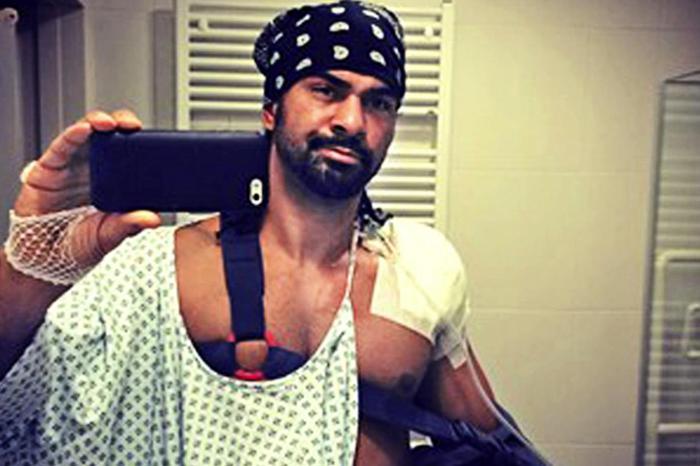
Which brings us to the former two-weight world champion. Just as Fury has every right to feel aggrieved that Haye dropped out of two matches, Haye is justified to have done so. His injuries were clearly legitimate; doctors even advised he should retire. After working hard and undergoing a long rehabilitation, he deserves his place at the table.

Nothing should be read into his recent first round stoppage of Mark de Mori. It had the feel of the Monte Barrett affair, with less danger (and that was relatively danger free). But it was a smart choice. Had Ricky Hatton made a measured return to the ring rather than facing off against Vyacheslav Senchenko, his legacy would read much different now.

Like Hatton in his doomed comeback, Haye showed – in the few punches that were thrown – that the exact timing still needs some calibration. What he also showed, which was something Hatton failed to do, was a killer finish that is as lethal now as it was in his supposed prime.

It naturally leads to the question: Why did he fail against Wladimir when Fury walked it?

Toe injuries aside, it was clear that the night in question was a bad day at the office for David Haye. Only he knows if the occasion got to him or if the long shadow of the Klitschko legacy meant he afforded his opponent too much respect. Also, he faced a Wladimir still at something like his best, the jury’s still out on whether or not Fury did.

The other man holding gold – WBC World Heavyweight Champion, Deontay Wilder – is another unknown quantity in the grand scheme of things. Flashes of brilliance have failed to hide a flawed boxer. The irony is, this new phase of the heavyweight which is bringing much needed excitement, is centered around two champions that are perceived to be lacking boxing attributes.

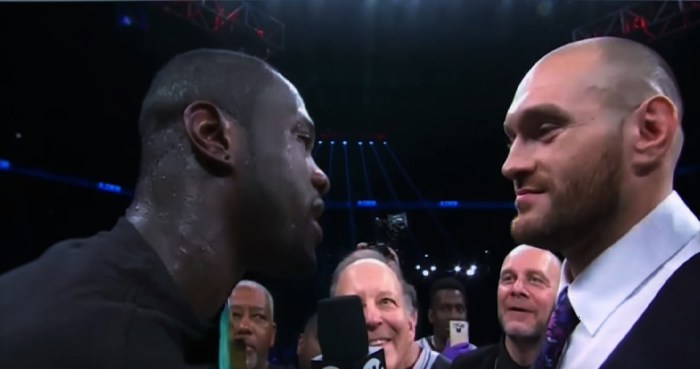
A potential Fury/Wilder meeting is a script that writes itself, in spite of their individual in-ring failings. Both are prone to get caught; the advantage Wilder holds is how he has demonstrated his knock-out power. After his latest defense to Artur Szpilka, where he was far from convincing but gave a KO so devastating it left the Pole motionless for minutes after the fight, the comic book antics with Fury commenced.

In a scene reminiscent from a Rocky film, Fury stormed the ring, ripped off his jacket and began trash talking. Deontay Wilder signed off with the line: “You can run around like you’re a preacher all you want but when you step in the ring, I promise you, I will baptise you.” Eat your heart out, Clubber Lang.

On the periphery of all these shenanigans is the next great hope: Anthony Joshua. If potential was a tangible commodity, he would need a landmass the size of Texas to hold it all. But mere promise alone doesn’t guarantee success – ask Audley Harrison.

Just as it’s impossible to say now whether or not Wladimir has declined, no one knows for sure if Joshua is the real deal. After examining his fights side-by-side with Lennox Lewis’s early contests, he does appear to have more natural ability. The test will be converting that talent into wins against better opponents. More importantly – credible opponents.

AJ is the promising wonder-kid, the elephant in the room other names tried to forget. Haye was the first player that properly acknowledged his presence and he was right to do so. At this moment in time, while Joshua is undergoing development, the slick Haye could prove too much. Against Whyte we saw how open AJ really is. Haye would expose this and proved against Nikolai Valuev that avoidance is his specialty.

After Haye made his statement about wishing to face Joshua, Fury said something similar. Presumably it helps keep talk of ducking fights at bay. The truth is, he’s involved in a Klitschko rematch, that should he win, leads into a showdown with Wilder.

If AJ has the talent, then the IBF world title eliminator that’s he’s expected to be involved in against Carlos Takam will be the big reveal. If he comes through that unscathed then championship gold will be within sight. Perversely his rivals must be secretly hoping he’s on a collision course with someone like Haye before he faces Charles Martin and relives the paper champ of his title.

Whatever happens in the next eighteen months, one thing’s for sure: heavyweight boxing just got unpredictable and entertaining once again, and whoever is champion a few years from now will have no doubts surrounding their legitimacy.