With no editing and little proofreading, here is a quick short story I threw together with the time of year in mind. All those that have participated in competitions know the panic of having days to compile a story with preordained prompts to a strict word count. Here, the prompts were the nativity, the setting was the modern day. You are the first Beta readers to see it.
If you are religious, please don’t be offended (although that is your right, should you wish), I’m not knocking religion nor bashing the Bible. I have unwavering belief in the Christian faith, from the nativity to the resurrection.
But I’m also aware religion, in all its forms, is now more a product of man than a greater universal force. Most of the Bible is metaphor or man’s interpretation, sometimes of a myth rather than personal experience. But it doesn’t mean the essence of God isn’t in there.
I’ve attempted to place one of the single most significant events from human history in a contemporary setting. It was done with a tongue in one cheek and a worrying eye on social disparities that are widening in this quickly altering world.
The Modern Nativity
Joseph supported Mary at her elbow as she negotiated the steps from the tram platform to the street below. They had been made to leave at Prestwich rather than their intended destination of Bury. The ticket inspectors couldn’t take pity on them, even with Mary in the latter stages of pregnancy, any more than they could ignore the dozens of other illegal travellers. At least they didn’t ask for their details; they couldn’t afford two tickets, let alone a large fine.
All public services were braced for a large influx of due to the government of the day declaring people had to return to their towns of birth and register for new benefits. Food banks were running low across the region and starting the following week, a person could only receive help from their birth council. For Joseph, this was Bury and had meant a long journey from Stockport.
A woman who enjoyed power miles away in London was draining the last ounce of resources from the most vulnerable in the north. The unnecessary travel was an expense many couldn’t afford. What she promised to build in services would come after the collapse of the needy. Some realised their own journeys were futile wanderings into regions were the food banks had already closed.
“What are we going to do, Joe?” Mary asked.
“There’s a Travelodge about half a mile away, we’ll head to that,” Joseph said, looking distracted.
“And then what? We don’t have enough money to stay in a Travelodge. We can’t even afford a bus.”
“There’s a Pret a Manger next door,” Joe said, “we’ll ask for tap water and see if anyone is driving to Bury.”
“What makes you think they’ll let us just sit there without buying anything?” Mary asked.
“Have a little faith, Mare,” Joe said, using the nickname he knew she hated. “If I can believe you’re pregnant without having sex, you can entertain the idea we might be okay heading to the Travelodge for a free cup of water.”
She replied with a sad smile. The baby wasn’t due for weeks but it suddenly felt heavy, as if reminding her they needed a place to stay.
“We’ll be okay,” Joseph said, brushing her dark hair away from eyes he could see were filling up with tears. “We’re not the only ones struggling at the moment.”
“I know,” Mary said.
They both knew. They also knew it would mean all spare rooms would be taken by those with a little bit of wealth left and she was in no condition to be sleeping rough. With dejected spirits, the young couple made their way to the Travelodge.
* * *
Jessie and Joel Shepherd were unlike most teenage siblings. Firstly, they were twins, a rare occurrence that accounts for three percent of births. Secondly, despite being seventeen-years-old, an age many expected them to find separate social groups and friends, they were as tight as ever.
The Shepherd twins kept their close bond by sharing mutual interests. To outsiders, it was always unclear if these interests were borne from compromise. Was Jessie really that into football or was it a way to drag Joel to pop concerts that a lad his age should detest? For every hour of Manchester City she watched with Joel, he spent four soaking up reality TV shows.
This naturally spawned another mutual pastime: social media.
Each show had multiple hashtags, these were like challenges to the Shepherds. To get on a trending hashtag, get a few retweets, was gold. They had a shared Twitter profile (naturally) and an Instagram feed. These now expanded beyond Big Brother, I’m a Celeb, The X Factor, Ex on the Beach, and a whole host of others. Hashtags were good for real life, too. Tonight was proving to be an eventful one.
Social discord proved more entertaining than the telly but the Shepherds were kind souls. They took little pleasure in the images they saw but found them gripping nonetheless. Fights had broken out in Manchester city centre, a few miles from where they lived. There was a general impression that people were being treated heavy handed.
Overcrowding, under policed, surprisingly unexpected: trouble was brewing.
Jessie was more taken by the human stories within these pictures. Men throwing bottles was a senseless act of frustration. But hidden beneath the headline grabber were the real stories.
The tag that was starting to do the rounds was: #TreatedLikeAnimals. One from a Metrolink stop in Prestwich showed a group herded off a tram. Apparently, none of them able to afford tickets.
The comments and replies were drawing parallels to Nazi Germany, to the irony of people without money being made to travel to get some but lacking the funds to do so.
Jessie noticed one person in the crowd that shone to her. A pregnant dark-haired woman clutching her belly protectively. She had a shawl over her head, no doubt a vain attempt to protect from the harsh cold, but it didn’t hide her pretty features or the fear spread across them.
#TreatedLikeAnimals
It hung there in Jessie’s mind. This was wrong. A woman in need would be out on the street tonight.
“Look at this, Joel,” Jessie said to her brother.
“I know, mad innit,” he said.
“No, not the crowd, this,” she tapped on the screen. “That poor pregnant lady.”
“It’s terrible, Jess,” he said. “But what can we do?”
“Make sure she’s okay,” Jessie replied.
“How can we do that?”
“Get this trending first,” she said. “Someone will see it and be near that station. Google Maps the nearest hotels and guest houses.”
“I’m on it,” Joel said.
The Shepherds started their hunt for the woman in need.
* * *
Maurice, Casper and Baz were known as the Three Wise Guys. It came from a playful but meaningful connection to mobsters. On film, it was term for Mafia members. These Wise Guys weren’t in any crew but they dabbled in affairs concerning local gangs when required.
They were all highly educated individuals that could have been at the head of big business. That hadn’t been their preferred choice. Using their combined intellect, they predicted the safest place to store money would be out of the system. To do this, they needed cooperation from the local crime lords.
The biggest of those was the self-proclaimed “King Harry.” He was a paranoid man that spent more of his time sniffing up his profits than actively enforcing his rule on the streets. The Three Wise Guys couldn’t stand Harry but they had to humour him, for now.
A large portion of their business was monitoring the movements of the rich and famous. Stars brought two things: money and demands. The Three Wise Guys happily took their share of the former and were happy to meet the latter. The problem was providing too much assistance on Harry’s turf. The King didn’t make money by allowing external product to be shifted in his yard.
Maurice, the heavyset Wise Guy but with a gentle nature, had been watching the movements of rich and famous in recent weeks for any patterns that would indicate some would return to their local councils during these testing times. It’s not that he expected them to need the facility of new benefits and food banks but it was good PR to be seen mixing with the masses.
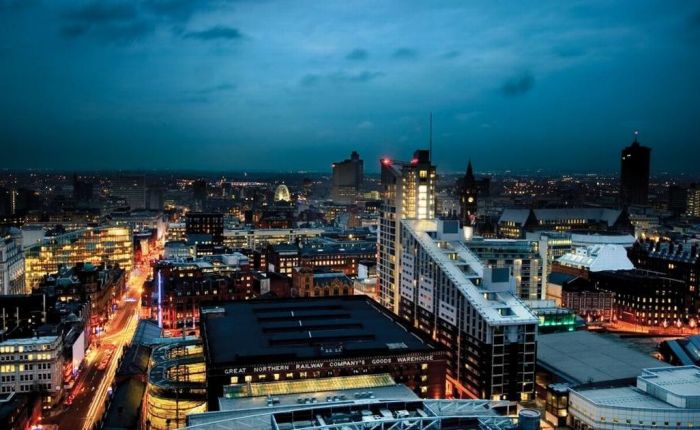
Weeks of labouring over GPS charts and tabloid media revealed a likely arrival in the Northern town of Prestwich. It was sandwiched between Bury and Manchester, a mix of religions and wealth.
“Casper, get Baz,” Maurice said. “We need to see Harry in the next hour and get on our way.”
“Why? Why the sudden rush?” Casper asked.
“The biggest star this area has ever seen is hours away from arriving in Prestwich—” Maurice started to explain.
“Yeah, and we normally give it a while and play it cool,” Casper said.
“If you let me finish,” Maurice said. “We won’t have the luxury of a slow introduction. Social media is trending about Prestwich.”
“What? How could people know about a superstar’s arrival? It took you weeks of digging.”
“It’s not the star they are trending about,” Maurice said. “There’s an overflow of people there and a pregnant woman is getting a lot of sympathy.”
“People are going to be filling that place up long before our star gets there,” Baz said from the corner of the room. “Let’s get rolling.”
* * *
The man at the Travelodge reception desk tapped his pen in annoyance. “I’ve told you,” he said with a glare, “no rooms are available now.”
“We just need something,” Joseph pleaded. “A place to sit down, get warm again.”
“Joe,” Mary whispered. “Joe, it’s happening.”
“What is?” he asked.
“The baby,” she replied, her eyes widening to confirm the point.
“When? How?”
“My waters broke when I went to the toilet.”
Joseph was dumbfounded, while he’d been out here arguing in the lobby, his beloved was experiencing the onset of labour.
“Look, mate,” Joseph pleaded to the receptionist, “she’s having a baby, right now! I don’t think you want that to happen at the front desk.”
“Seriously,” the man said with equal enthusiasm, “if I had a spare bed, she’d be on it. I don’t care that you can’t afford it. But I don’t. There’s no room here. I’ve got entire families in twin rooms already.”
“There must be somewhere she can lie down.”
“Just the utility room,” the receptionist said. “It’s where we keep the ironing boards and stuff like that.”
“That’ll do,” Joseph said.
They hurried to the small thin room, Mary was placed on a mattress that had been discarded because of a series of unnerving stains. Old CRT televisions acted as a headboard, burnt ironing boards framed the walls.
“You’ll have to leave the door open,” the receptionist said.
“What?” Joseph said dismayed.
“For some reason the alarms go off if it’s closed for too long,” the receptionist said apologetically.
“I’m going to need an ambulance,” Joseph said.
“That’s a joke, right?”
“No, I don’t have a clue how to assist in a birth.”
“Sir, there aren’t enough ambulances to cover this area.”
“Surely this is an emergency.”
“I’ll try but, well, they haven’t come out for people on death’s door lately.”
“Oh, please, God,” Joseph said.
“I’ll ring around the rooms for a nurse or doctor,” the receptionist said. “You never know, right?”
“Thanks,” Joseph said. “And ask in the café next door, the Pret a Manger.”
“Will do.”
A small crowd gathered at the door. They all enquired how she was doing, some took pictures of the pregnant lady expected to give birth in a utility room. With the door open, the pictures on social media started to trend with #BornInABarn attached.
* * *
King Harry saw this and also noticed the expectant father in the picture. He was Joseph from a rival family. They had a good heritage but had fallen on hard times. This sort of attention could be bad for Harry. He wanted to brush the problem under the carpet.
A solution appeared, as if his wishes were being heard, in the form of the Three Wise Guys.
“So, let me get this straight,” Harry said. “You want permission to visit the area of Prestwich, a particular Travelodge, and service the delights of the aforementioned superstar?”
“Yeah, Harry,” Baz said, he was the best for negotiating with tough customers. His abrasive style and street look was a language they all understood.
“You may go there and keep the star in good spirits,” Harry said with a smile that revealed gold teeth. “Take some of my product and return with a contribution of your profits.”
“Yeah, standard innit, Harry,” Baz said.
“And one other thing,” Harry said.
All three Wise Guys visibly tensed.
“What, Harry?”
“It’s caught my eye that a large crowd is already there, have you seen this?”
“No,” Maurice said, his voice wavering with the lie.
“Okay,” Harry smiled. “Well, there is. And in particular, a young woman is in the motherly way but she won’t be for long, if you catch my meaning.”
“She’s about to drop,” Baz said.
“Oh, so you have seen?”
“No, we haven’t,” Casper said.
“Anyway,” Harry continued. “I would like you to give the new parents a gift from me. The young man, Joseph, will know what to do with it.”
* * *
In the final seconds of labour, before her Baby entered the world, Mary thought of her cousin Elizabeth. She had held her hand tightly when her baby, John, had appeared. Now a few months later she was in the same position, with Joseph, against all the odds, holding hers. Understanding Joseph. A kind man, fit to raise her little King.
“Almost there,” said the former midwife. The social media activity had alerted her to Mary’s predicament. Her thirty years of experience couldn’t have prepared her for what she found in the cramped broom cupboard. She wouldn’t refer to it as the “utility room” as it lacked both parts of the name.
“One more push, Mary,” the midwife said in her Irish accent. “Almost there.”
A flash of lights from the cameras of the paparazzi filled the area as a world-famous, much sought-after star entered the Travelodge lobby. The clicks were met with a chorus of wails from the fresh set of lungs in the utility room.
Mary cried with relief.
#MiracleBaby
* * *
The Shepherds arrived at Pret a Manger and politely asked Joseph if they could see the baby.
“Let them in,” Mary said. “He is a special baby, we shouldn’t deny the world.”
“Thank you,” Jessie said, already getting her phone ready for the Instagram snaps.
“How did you find us?” Mary asked. “We’ve only been in here a few minutes.”
“Hashtag, Away in a Manger,” Joel said. “Started out longer, Pret a Manger, but you know, one-hundred-and-forty-word count. Something had to go.”
Mary smiled, at their warmth and how they both had lots of white curly hair. Brother and sister, she thought, probably twins.
“He’s known as the Miracle Baby online,” Jessie said.
“He is,” Mary said and nodded to Joseph. “He really is.”
“May we enter too,” a man’s voice asked from behind the Shepherds. It was Maurice of the Three Wise Guys.
“Who are you?” Joseph asked with an air of distrust.
“We mean you no harm,” Casper said.
“We are well travelled to see you,” Maurice said. “We bring gifts for the Miracle Baby.”
“And a warning, innit,” Baz said.
“A warning?” Joseph asked.
“Yes, I’m afraid so,” Maurice said. “You are aware of the man that runs these streets? King Harry.”
“Yes,” Joseph said.
“He sends this gift,” Maurice said as Casper laid out a brown brick-shaped block wrapped in Clingfilm.
“Is that what I think it is?” Joseph asked.
“Yeah, an H-bomb,” Baz said. “Some pure horse. Street value, five-K.”
“And a trap,” Maurice said. “We believe he intends to let the services know you have it so you lose the baby, have it taken into care. We are supposed to report back to him but we are cancelling our plans here and returning down south.”
“Why would you risk that for us?” Joseph asked.
“We want the best for the baby,” Maurice said. “As such, take our gifts. Credit cards that will keep you in money for the foreseeable future, clothes for the baby and some more money in the way of gold.”
“Thank you,” Mary said.
“Have you named the baby?” Jessie asked.
“Yes,” Mary smiled. “Tell them, Joe.”
“Well, any Man City fans here?” Joseph asked.
All five guests nodded.
“Then we’ve all had the messages from Gabriel so it seems fitting we call him Jesus.”
They all smiled in appreciation.
“Make sure you keep baby Jesus safe,” Maurice said. “Many will attempt to cause you harm.”
“Where should we go? For how long?” Joseph asked.
“Across the border to Wales perhaps? Or Scotland. And leave it for a number of decades,” Maurice said.
“Yeah, nobody needs to hear about this boy until he’s into his thirties,” Baz said.
#TrueKing
 The Reflective Page