
EFL Short-sighted

EFL Short-sighted

The English Football League (EFL) demonstrated ignorance and a lack of understanding with wider issues this week, in doing so it deepens a rift between its member clubs and the administration of the EFL. The much derided EFL Trophy, now renamed Checkatrade Trophy, was always a bone of contention. Now the fears of lower league clubs have been manifested in the form of ridiculous fines.

The concept of the revised EFL Trophy was after the lower tiered Football League clubs spoke out against the proposed League Three option, fearing the inclusion of Premier League B Teams would be a further example of looking after the big clubs at the expense of those without. Also, it would have damaged the accessibility of the current loan system.

The Football Reflective was a fan of the idea (Fair and Three) as it took a holistic view. The current loan system hasn’t proven to be beneficial for the donor clubs. Aside from Manchester City, who appear to frequently send their coaches to assess and assist those loaned out, once a player has left the nest they are under the guidance of lower grade coaches using lesser facilities.

The FA, after years of mounting evidence that suggests the national team has a bleak future, is desperate for a solution. When League Three was written off, they needed a halfway house. A trial to see if there would be the appetite for B Teams to mix in competitive ties with lower league clubs.

They took the essence of a good idea and managed to turn it against itself.

The EFL Trophy in its former guise was a good opportunity for the teams from the bottom two tiers to have a day out at Wembley. Not many cared for the competition until that chance was on the horizon, but when it appeared a play-off final vibe arose.

Adding select upper league clubs’ under-21s to the mix destroyed that slight fantasy. The idea of Stoke U21s v Wolverhampton U21s at Wembley doesn’t have any of the romance. All it would do is confirm to the smaller clubs that football in this country only cares about those higher up the league pyramid.

But the clubs that bemoaned the idea of League Three do need to take some responsibility. Their fears have turned into a self-fulfilling prophecy, acted out during the EFL Trophy.

Most blame has to go to the EFL itself. This week they fined twelve clubs, ranging from £3,000 to £15,000 each, for fielding weaker sides(five players must have appeared in the previous game, or contain the five most used players from the season as a whole). A format they didn’t trust has now hit their pockets.

Luton chairman Gary Sweet summed up the disparity best when he remarked he shouldn’t be paying fees to give his youth players experience. To make matters worse, his club’s youth defeated a side from the higher tier. So, is the Checkatrade Trophy only about developing youth players from big clubs?

The fear of the voiceless now realised with the opening of a cheque book.

The EFL Trophy fines come at the same time as talks to restructure the EFL to four leagues of twenty teams collapsed. Here the clubs and league are equally short-sighted. Chief Executive of Shrewsbury, Brian Caldwell, has been one of the most outspoken against. His concern, one mirrored up and down the country, was a reduction in fixtures would mean less money.

The EFL countered this by promising more Saturday fixtures, seen as a way to avoid the lesser attended midweek matches, claiming this would actually increase overall revenues. That plan was supposedly scuppered by the FA’s latest oversees TV deal for the FA Cup. The weekends they’d planned to use are now locked in for FA Cup ties.

By removing themselves from the negotiating table too soon, the EFL has failed to see its strong hand. Without the EFL clubs there is no FA Cup. The football league could have driven the demands for better distribution of wealth and proceeded with the reformation of its structure.

Not compromising for a few FA Cup weekends means its platform stays stuck in the past.

The Championship may be the fifth most watched league in the world but it has the weight of the entire lower tiers on its shoulders. It can’t thrive unabated like the Premier League, there is a glass ceiling imposed due to the EFL’s overall structure. It may carry the load but it is the EFL that should shoulder the burden.

Doing nothing will only see the gap between the haves and the have-nots grow.

By being overly defensive of the FA and Premier League’s intentions, the EFL and its members have only spited themselves. If the road to Hell is paved with good intentions, the road to obscurity and obsoletion is paved with paranoia.
FIFA Reveals its True Colours

FIFA Reveals its True Colours

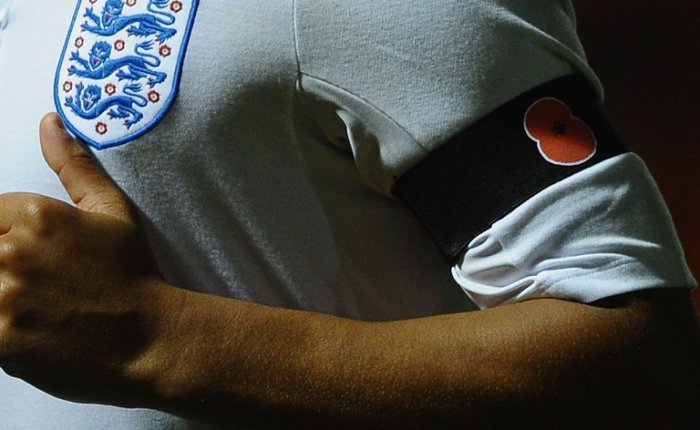
It should come as no surprise that FIFA is back in the headlines for all the wrong reasons. The scandal hit organisation continues to display a lack of decency and awareness of public sensitivities. But poppies aren’t the peak of the problem.

FIFA’s announcement that wearing the poppy to mark Armistice Day goes against their rules covering the use of political symbols, has attracted much scorn on these shores. Understandably this was always going to be an emotive subject. To be told by a proven corrupt organisation, that it is incorrect to remember those that gave the ultimate sacrifice to ensure the freedoms we all enjoy, is beyond the greatest insult that could be spoken.

To enforce it as law is criminal.

The poppy doesn’t care about the motives behind men’s wars, it only displays respect and remembrance for the people that gave their lives.

While Armistice Day is held on the day and hour marking the end of World War I on the Western front, it has since combined with Remembrance Day to honour the servicemen and women that perished in both World Wars and every conflict since 1945.

Even this doesn’t add a grey area to the matter. The sight of a poppy doesn’t carry undertones of a political system or make wearers support a certain way of life. Unlike the swastika. From innocent beginnings as a Hindu symbol to attract good force and discourage evil, it became synonymous with the Nazi regime. This means the swastika will always have political connections, regardless of intended use; the poppy is a perfect example of an apolitical banner.

But there has to be a measured argument against FIFA, and it’s displayed on numerous occasions how out-of-touch it has become with the real world. From Sepp Blatter’s defiance in the face of irrefutable evidence, the blind eye it turns to human rights’ atrocities, the amassing of wealth when it claims to be non-profit, and the announcement that the world no longer suffers from racism.

It’s hard to judge too harshly when FIFA clearly exists on a planet alien to the rest of us.

The poppy ban has gathered the most media coverage in this country. England and Scotland already declaring they will defy FIFA on this matter. Failure to do so would have further sanitised the human element of the game that is self-proclaimed “beautiful.” But its beauty is being deformed by the distasteful motives of its corrupt keepers.

But the poppy ban shouldn’t be seen as the breaking point and call to action. That should have come a little over a month ago when FIFA announced its anti-racism taskforce had completed its mission.

If we’d been without a racist incident in ten years we’d still need a task force. As it stands, we haven’t even managed ten months. Add to the fact the next World Cup is heading to a country riddled with the problem, and houses teams that have recently served punishments because of fans’ racist behaviour, the announcement is more maddening.

Racism will always exist, it’s a sad symptom of any society. The taskforce should always exist in order to repel it at the first sign of a re-emergence.

Like all self-serving fascist dictatorships, FIFA broadcasts propaganda as fact. The more feel-good spin it can produce, the better. Let’s all pretend FIFA have ended racism. Another great success story for football’s benevolent overlords.

Oh, and the poppy represents suggestive ideas we should oppose, but don’t worry: in FIFA-world the only politics are the ones we take care of; you can trust us, we even managed to end discrimination and disharmony.

In the real world: Another dark episode from a despicable regime.

FIFA should be guardians of the game but are failing. We should be guardians of morals and ethics in their absence. Failure to contest any incoming punishment for the poppy ban, and widespread demand to make FIFA fund an independent Racism Taskforce, would be an equal failure.

If FIFA is so worried about using the game to send political messages, it should stop and consider its own behaviour. At the moment, it’s reminiscent of those that proudly wore Hindu symbols while imposing deceitful legislation on the unassuming masses.

Premature Pep Talks

Premature Pep Talks

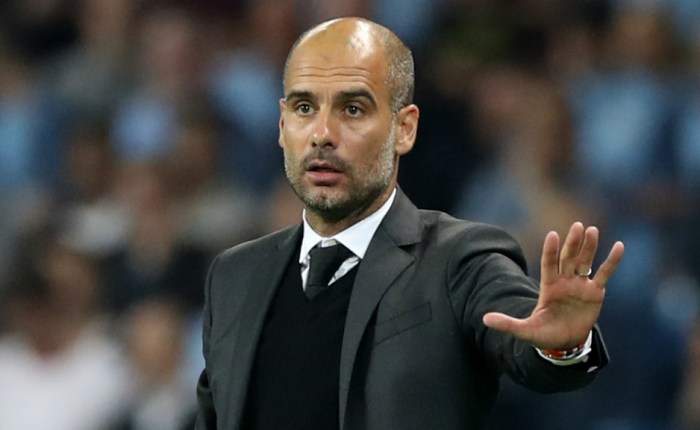
Ever since Pep Guardiola arrived at Manchester City he has been subjected to an unprecedented degree of inspection and expectation. Understanding the negative impact this could have, Pep has been the voice of reason. When City started the season with a run of ten wins, he spoke to closed ears when attempting to explain it wasn’t a true indication of the team’s current level. Now with a dip in form, he once again faces ignorance from a media determined to undermine Europe’s most successful manager.

Suddenly there is no shortage of experts offering advice to the Spaniard. Pundits that occupy seats in the safety of studios, or journalists who have to service the wants of fans from opposing clubs (the clickbait brigade), are suggesting that his proven methods will never work in the Premier League. That before we’ve even entered November, it’s time to admit the English way is unique and his crazy ideas have been shown up for what they are.

Not satisfied with telling a man – who was happy to point out in Friday’s press conference he’s won twenty-one titles with his ideals – his tactics are wrong, they are also attempting to forge wishful transfer rumours into facts. He was happy to point out where they are incorrect.

Beneath the obvious, are more subtle claims. These are just as easy to dispel. The most erroneous is that in principal he is no different to predecessor Manuel Pellegrini. For those that found that amusing (as any serious person should), take a second to let the giggles pass.

The notion comes from the half-baked view Pep and Pellers both shared a common denominator: They have one way and no Plan B.

This was clearly a case that could be mounted against Pellegrini. Like Roberto Martínez, it seemed they’d rather lose playing their way then adapt to opponents and unique situations. They refused to be proactive, instead soldiering on, expecting different outcomes with faltering systems.

Pep is different, and certainly not a one-plan man.

The ethos – his religious view on how the game should be played – will remain consistent, but within the framework changes are made. Whether it’s switching to three at the back or an extra man in midfield at the expense of a striker. There was always a rigidity with Pellegrini (even with formation changes) that isn’t evident with Pep. A tailored approach after examining the opposition has replaced blind optimism, or should that be: plain stubbornness.

When those able to acknowledge Pep has adaptability, they cover it by saying he should slowly implement his ideas and until then play to the strengths of the current squad. It can’t be argued that the best managers go in and work out where strengths are and chop the weaknesses. But isn’t that what he’s done already with the brutal treatment of players like Joe Hart and exclusion of Yaya Touré?

It’s only managers who are survival experts, like Sam Allardyce, that allow personnel to dictate shape and style. There’s a reason veterans of the managerial game have never featured in the Champions League while Pep has won it two times.

It is always a results based business – Roberto Martínez would have done well to remember this – but to take the silverware, become an all-time great, you need to have ideals that can be transposed across a spectrum of tactical problems.

He’ll accommodate players where possible but ultimately they bend to his will: his ethos can’t change for theirs.

Unlike Pellegrini, who it seemed sent players out with vague instruction, Pep makes it clear what he expects to see. When his system fails it’s obvious where individuals have been lacking. This accountability makes it easy to root out weaknesses and build the correct team. That process is now underway following the passing of the honeymoon period.

Players are beginning to show their true colours. Some are just unsuitable for the demands Pep is making. Others, through either poor work ethic, attitude, or time of life, cannot perform to the required standard. Pellegrini may have ignored their shortfalls, Pep will not.

Guardiola also knows football tactics are constantly evolving, it’s why he came to City. This opportunity is the continuation of his education. There’s no suggestion he’ll plough on with failing tactics but he’s confident the overriding ethos works.

People shouldn’t complain when José Mourinho parks the bus because it’s boring, they should question why he’s still rolling out tactics from yesteryear. Pep’s dynamic approach makes even the Portuguese United boss look like a tactical dinosaur.

But members of the “Red Press” would rather highlight Pep’s perceived failures, that are nothing more than growing pains, and ignore how the Special One has become the Stagnant One.

They also believe his tactics have been worked out. That Celtic somehow exposed the key to the conundrum when they only replicated what Swansea had attempted. Pep would rub his hands at the prospect of every team pressing City every game until the end of the season. If his system is implemented correctly, they’d be making the space for him in vital areas of the pitch.

But it’s easier to pretend after years of success, the brutal nature of the Premier League has cracked the Guardiola code. It’s as if he was the Illuminati and Brendan Rodgers formed some part of a Da Vinci Code, that the Tom Hanks looking Premier League managed to work out in time to prevent an embarrassing runaway success.

Thankfully people like Robbie Savage have sound advice. The man that only adorns the BBC because his dress sense brightens up the dreary looking Phil Neville, and his mindless enthusiasm on commentary offsets the drier tones of Mark Lawrenson, believes Pep isn’t a tactical genius after all. Robert Langdon – sorry, the Premier League – has seen to that.

Nor does Pep need to reinvent the wheel to conquer Europe with City, just fix its punctures.

And that’s the problem: Pellegrini didn’t leave Guardiola with a working wheel. It was a shiny cart with its components used for forward motion removed, instead sat upon shaky bricks and an instruction manual that had been left out in the rain. City didn’t need tweaking, they required revolutionary treatment.

There is no one better in the game to provide this than Pep Guardiola.

Like any revolution, it will take time. Those that have faith will be patient, those with hope it fails will fabricate stories and print insincere views to upset the steady progress.

Pep doesn’t need to change his ethos; he just needs to realise in the land of Premier League football, freedom of speech means the nonsensical have the loudest voices. But empty vessels do make the most noise…