Batman Returns: It Was Never About Burton

Batman Returns: It Was Never About Burton

There are moments when it’s possible to realise your favourite thing isn’t objectively the best example. This applies to media that ultimately require a subjective take: favourite song, favourite food — favourite movie. Batman has appeared on film in many guises now. From the camp Sixties variant, to Burton’s 1989 revival, Nolan’s Heat-inspired Dark Knight Trilogy (although, that inspiration only applies to the second outing), a gritty, ageing Caped Crusader in the Snyderverse, and the Matt Reeves take on Year One Bruce in The Batman.

Of all the reboots and relaunches, this writer’s desert island Batman movie is Batman Returns.

It’s not objectively the best film out of all the ones on the list. Others achieve better visuals, cinematography, storytelling, performances, soundtracks, scope. But great ingredients still need the correct conditions and the right chef. Batman Returns remains the one Batman movie that has stood the test of time because Tim Burton’s style brought all the ingredients he had at his disposal to something the world either wasn’t ready for, hadn’t been expecting, or misunderstood. 

A regular criticism of Batman Returns – one which even fan sites repeat – is that it’s a Tim Burton film, not a Batman film. Sure, his particular style is familiar. To be less kind, you could say somewhat formulaic. Edward Scissorhands shares its DNA with Charlie and the Chocolate Factory, and Beetlejuice. Part of that shared code is Burton’s proclivity for gothic fantasy.

In The Dark Knight’s case, it wasn’t Burton imposing his style on Batman: it was revealing a shared understanding. What is more gothic than an orphan becoming a bat-shaped vigilante under the cover of darkness? Or a woman cheating death and becoming cat-like? And a baby discarded and raised in the sewers beside penguins?

Dark, gothic, and delivered akin to Legends of the Dark Knight, a monthly comic which showed a more off-kilter version of Batman and Gotham.

And let’s look at Gotham. A city that existed in Batman lore long before Burton placed it on film. He didn’t put the Goth into Gotham; he was merely a tourist capturing the moment.

The criticism of how the film has been perceived doesn’t just end with the flawed Burton argument. From fans to marketing partners, there was a disconnect because people’s predisposed ideas created a gap between the film and their expectations of what a Batman movie should be.

Looking back, it’s hard to understand why there was such a disparity. Batman may have been more avant-garde than what we eventually saw in Batman Returns, but it was clearly aimed at teenagers and above. It was the first general cinema release to receive the 12 certificate, before being classified 15 for home video. So it has to be said, Warner Bros. were idiots for entering a Happy Meal deal with McDonald’s for its sequel. That’s what Batman & Robin exists for, Returns was never going to tonally become a kids’ movie. The association with a Happy Meal meant people complained louder about its darker themes and violence. It was set up to be viewed through the wrong optics from the start.

Negative press aside, why does it – on its own merit – deserve the crown of Desert Island Batman Movie?

Burton’s second take on Gotham completely shifts from the Art Deco we saw in Batman. This is a Gotham submerged in snow and the otherworldly. It doesn’t attempt to be a twisted New York. This plays like a tiny microcosm of the bizarre, damaged, fantastical, and corrupted. A fairy tale of Batman versus versions of himself he could have become. It isn’t Batman does a Burton, it is Burton inhabiting Batman.

The set-up is simple enough: a baby so grotesque in deformity is placed in a basket and thrown into a river. That baby is Oswald Cobblepot, The Penguin. He emerges from the shadows as a lonely orphan turned accidental hero. The world doesn’t know he staged the scene but Gotham takes him to heart. Its other heroic orphan has suspicions. To pull off the deceit, he blackmails Christopher Walken’s Max Shreck, a wealthy businessman and also the centre of Michelle Pfeiffer’s origin story as Catwoman — he kills her (don’t worry, cats revive her into Selina’s comic book form) because, as a shy secretary, she reveals she knows too much.

Later on, it became the trend for superhero movies to overload with multiple bad guys. It killed Tobey Maguire’s run as Spider-Man. Here, it works perfectly. No one is included for the sake of having the character in the film. Danny DeVito nails The Penguin with more one-liners than Jack Nicholson managed for the Joker. Walken provides the cement in the evil chaos and then there’s Pfeiffer.

People can debate the best version of the Joker. Some versions won Oscars, others were the standard for decades. Colin Farrell has opened up the Penguin debate. Best Batman is a title that will likely never be universally agreed upon. But Michelle Pfeiffer is the definitive Catwoman. No one has come close over the years, and what underlines the point more than anything is there have been very strong performances elsewhere. But Pfeiffer is Catwoman.
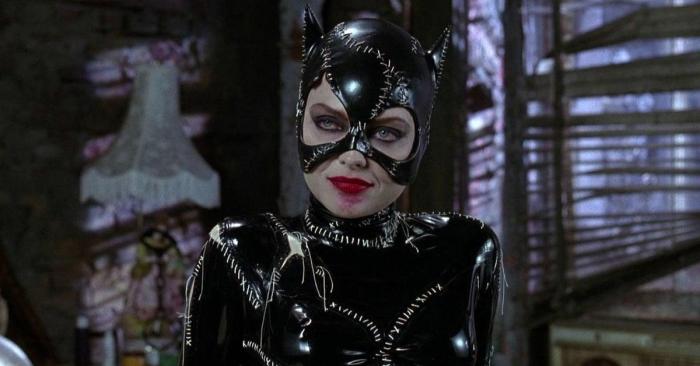
Across from these three towering figures, who take it in turns stealing scenes, is Michael Keaton’s Batman and Bruce Wayne. In the 1989 movie he announced himself to the world with the answer: “I’m Batman.” In Returns he becomes Batman. From the moody shot of him waiting for the Bat-Signal to light up his room in Wayne Manor, to the way he holds steady when all around is falling apart. The scars of his life, and loss of love from the last movie, to the dynamic with Selina Kyle when she’s not in Catwoman leather, he is a complete Batman.

This is where the film’s excess starts working in his favour.

The absurdity of a man dressed as a bat, fighting crime at night, falls away in a world where DeVito’s Penguin becomes mayor and Pfeiffer licks herself clean in her catsuit. It allows Batman to be stripped back to the World’s Greatest Detective motif. He’s the solid structure facing an increasingly crazier world. With the suspension of disbelief required for a gothic fantasy, Keaton’s Batman becomes the logical choice for saviour. No fan ever read a Batman comic and called into question a latex-wearing vigilante. They don’t here because Keaton encapsulates that character in an environment that allows him to exist in the cape and cowl without explanation or justification. Nolan needed almost an hour of film to show his Bruce Wayne training in the League of Shadows after fleeing Gotham. He does forge a believable Batman, it just required a lot of exposition. Burton only needed to put Batman in his true home; no more questions required.

Time hasn’t tainted what’s captured and even if the nostalgia coefficient is applied, there are iconic moments that, when added together, a modern-day franchise would be proud to have collated. They appear here in a singular film. Pfeiffer’s transformation, her changing the neon apartment sign from Hello There to Hell here. Using her whip in the department store, a shot she tirelessly performed herself until perfected. Penguin’s “At least my nose isn’t gushing with blood,” or “I have a name, Oswald Cobblepot,” and “Burn, baby. Burn.” The list of quotes across all characters could fill a few articles. It’s pretty much the bulk of the script.

The “Things change” face-off.

So many modern movies fall under the weight of the third act. The Batman loses the early credit it gains by going too big with a massive ramping up of the stakes. It was too much. Batman Returns keeps it simple. Penguins with rockets equipped. Nothing overly complex; the characters are already layered enough.

For all the moments that should be absurd – but work in this setting – we still have heart. A Bruce Wayne seeking companionship and a way out with someone he knows is flawed but can also see how character is formed in 50/50 moments. His faith in the good he sees in Selina, enough to give up the mantle of Batman to save each other. A surreal movie with so much dark comedy, the fact it still has humanity shows it was doing everything correctly. Perhaps its biggest mistake was doing it too well. Marvel movies like to spell out every emotion. DC – until James Gunn’s new era – generally were darker and relied on the audience to read the subtleties for themselves.

Batman Returns is a movie that delivered on every level, but was sadly overlooked. Batman changed the way superhero movies were perceived and made. Nolan’s trilogy changed them again. Marvel demonstrated how to make a cash cow from IPs. Those last two shifts mean it’s unlikely we’ll see such a complete standalone comic book movie again. They will either try to be too serious, or too mainstream.

Batman Returns was dark, but light. A blockbuster ensemble for a niche audience. Guilty, perhaps, of giving people what they say they want, only to reveal that what they want and what they are willing to accept are not always the same thing.
Movie of 2016: Room

Movie of 2016: Room

Okay, technically this did get a late 2015 release. However, here in the United Kingdom it was a January film so that’s good enough for me to view it as a movie from 2016. Coupled with its inclusion in this year’s Academy Awards, it has a valid enough reason to be as classed a movie from the last twelve months. But why the best?

After a whole year, to drag a film back from the previous December speaks volumes for its impact. It should be a story that is too grim to place the spotlight on. Even if executed well, it should have been put on a shelf and been everyone’s sad but buried movie. Well, it wasn’t shot, written and performed well – it was almost perfect.

Emma Donoghue took her 2010 novel and turned it into a screenplay before the book’s actual release. It’s a great example of allowing the author to nurture their work to the big screen. The result is clear to see. Profound, in fact. Who else could have added the required layers to the characters from the page?

This may sound strange, the idea of an adaptation adding to the written word, but leading star and Oscar winner for her performance in the film, Brie Larson, explained in an interview it was after seeing the script, and realising her character’s role had greater depth than the Joy portrayed in the book, that she had no doubts about joining the project.

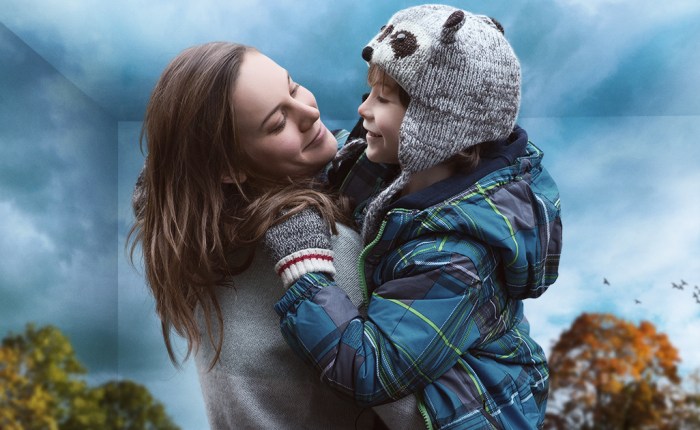
She worked under director Lenny Abrahamson to tell the story of a young woman who had been abducted years before and kept hidden in a small outhouse. It forms the “room” for the first part of the story. Trapped with her is Jack, played by Jacob Tremblay, her five-year-old son, a product of the repeated rapes by her captor.

Jack has never seen beyond the room. His perceptions of the world are from Joy’s teachings, she has told Jack the world is just their space. Everything on the television is make believe. The world has shrunk to the size of that room, to just one another. It’s part coping mechanism, part defensive measure.

Joy ensures Jack is kept locked in the cupboard during the nightly visits from “Old Nick” (their jailor). The author confirmed the naming is a nod to the old Christian term for the devil; Joy and Jack are unaware of his actual name.

After an impromptu meet between “Old Nick” and Jack, Joy decides she needs to get her son out of the room and reveals that a wider world does exist. What follows is nerve-wracking and heart-breaking. It shows the best and worst of humanity in close proximity and quick succession.

It’s no spoiler to say the movie moves on beyond the room, where mother and son have to adapt to a new world.

Larson has already been awarded for her role but she should cut that Oscar in half and send it to Jacob Tremblay. Watching him become familiar with the world while expressing the bond with his mother is something magical.

Before shooting, Lenny Abrahamson got the two actors together on social dates to see if there was a connection that could be caught on camera. He must have felt like he’d hit the jackpot. Tremblay said in an interview he was so friendly with Brie in real life he found he couldn’t shout at her in one scene. That true friendship is the backbone for what comes across as an unbreakable bond.

The world Joy and Jack find themselves in after the room has more traps than before and is a struggle for the pair. The pieces of a broken family, confused relatives, a relentless media, to name a few. But a film that spends so long pulling on heart-strings before breaking them, is also inspiring. The expression of true love overcoming all evil.

From the darkest nature of man, two people of pure goodness emerge.

Usually it’s best to read the novel first then view the film with a critical eye, adding the obvious line: the book’s always better. In this case a complete reversal works: after watching the movie, it’s unfathomable that the written word can prove to be more emotive.

It’s understandable people will draw parallels or conclusions to real-world stories that have similar points but these are always portrayed as horrors in the media. This story shows us the central points between the two victims involved and despite all that they endure, a real feeling of hope becomes the fabric of their tale.

Sometimes, the only thing that a person needs in an entire world is just one person to love them. Brie Larson and Jacob Tremblay have expressed this better than anyone has previously managed on film.

The Force is Strong in this One

The Force is Strong in this One
Note: While care has been taken to not divulge the entirety of the plot or giveaway exciting twists and reveals, as always in The Kinswah Reflective, the regular tone applies which includes examining certain aspects of the movie. If you haven’t seen The Force Awakens yet, then it’s recommended you skip this review for now.
Finally, the anticipation is over and the most hyped film ever has been released. Under the weight of its own expectation there was a danger Star Wars: The Force Awakens would end up being a crushing disappointment. Fans of the Star Wars saga had been there before after the release of George Lucas’s prequel trilogy. Thankfully J.J. Abrams has alleviated those fears and surpassed the hopes laid down by a new generation.
From the opening scene, it’s clear Abrams is aware of the universe he’s helping resurrect. It was a franchise he grew up with and hasn’t set out to reinvent the wheel, like George Lucas did with the prequels, instead his job has been getting the old familiar to spin once again. With the use of goggles to scan the distance, using the same graphic from Empire Strikes Back‘s ice planet of Hoth scene, a sense of reassurance settles in.
The nods to the past merely tease nostalgia, as opposed to making a vulgar grab for it. After a few more scenes it is clear we are in an authentic Star Wars universe. The prequels felt disconnected, both visually and from a storyboard point of view, from the original films. Here J.J. manages to immerse the viewer back into the world first seen in A New Hope.
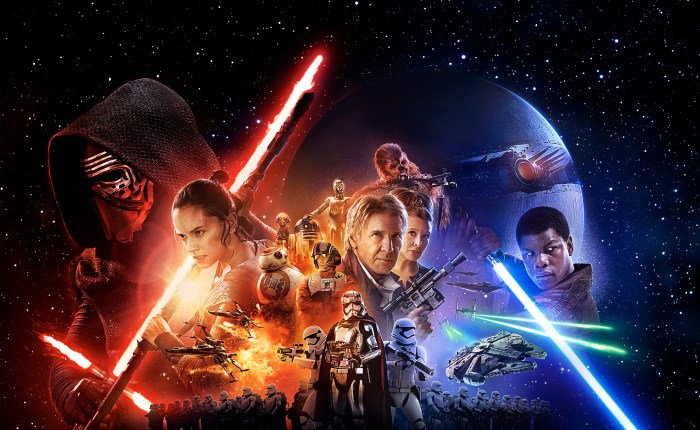
This is no doubt helped by the use of actual sets, allowing for the imperfections and grime of a real world. Just like the original 1977 movie, the characters are easy to connect with too. Daisy Ridley’s Rey, plays the role of lonely scavenger on a dusty planet. She soon gets a droid that’s on a secret mission. Sound familiar? It should and it doesn’t matter. This formula works in Star Wars for a reason.
Rey is soon teamed up with Stormtrooper defector Finn, played by John Boyega. Unlike Luke from the original movie, Rey is already driven and headstrong, so Finn doesn’t need to play the role of Han Solo or Obi Wan. He provides the everyman role we can all relate to. He wants to do good but is aware of the dangers.
Plus, we get given Han – and Chewbacca – so it allows Boyega to provide comic relief. The laughs are littered throughout the story without ever being cheesy. J.J. has managed to balance drama and fun perfectly.
It’s not just the very first film that sets the ambiance for all that follows. Acknowledgements and inclusions referring to The Empire Strikes Back and Return of the Jedi are placed throughout the movie. Each one accentuates the feel of connection rather than labours it. The Force Awakens isn’t a spectacle that requires a prop-up from the past, it just absorbs those used because they fit the scenario so freely.
Unlike J.J.’s interpretation of Star Trek which also required him to juggle history and move the brand forward, he doesn’t recolour the old palette. Star Trek needed an overhaul, Star Wars just needed to be put back on its original footing.
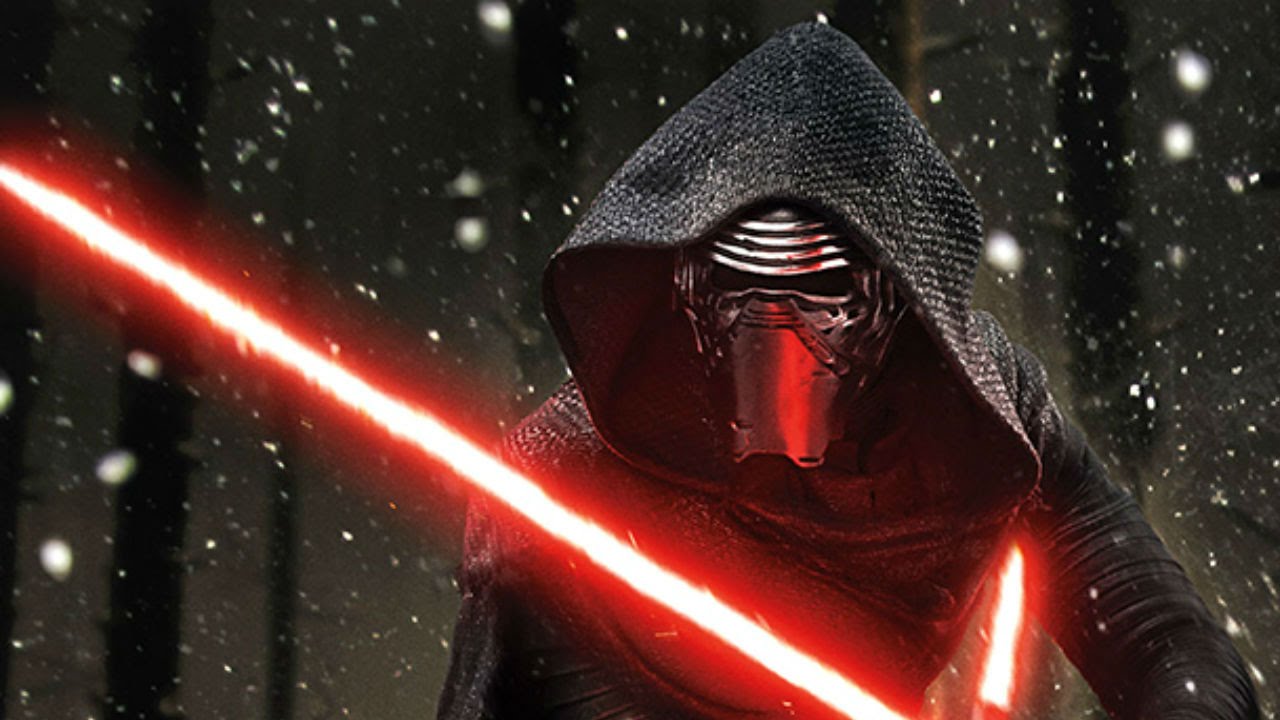
The main focus of the saga, the drive from prequels until Darth Vader’s redemption, is the balance between the light and the dark side. Adam Driver is the actor asked to carry that load this time around. He plays the villainous Kylo Ren. As a nod to Darth Vader, Kylo Ren has chosen to wear a dark mask and matching attire. He’s aware of Vader’s history and feels obliged to continue his goals. If you’re reading this after the warning note at the top, then you can’t blame me for mentioning, this sense of duty comes from a family connection.
It isn’t a burden he bears lightly. Driver excellently displays anger, inner struggle, fear and retribution. Mid-film he unmasks; this could have killed the mystic the imposing figure had created. But it was a genius move. It allowed Driver to fully express all his uncertainties, sadness and rage. Having all the contradictions works for the subject matter.
J.J. has managed in one film to show the descent to the dark side more effectively than George Lucas did with his entire prequel trilogy. For everything that was contrived and poorly acted in in those films, there is an organically produced alternative in The Force Awakens performed by actors excelling in emotional roles usually reserved for the theatre.
The greatest testament to the payoff in all this is how Kylo Ren, for all the vulnerability he shows, is hated by the end of the story. There’s no creation of the cool anti-hero here. He’s a bad guy you want to see lose, making Rey’s character easier to get behind.
Running alongside the force is the story of political power. It has always been present in the Star Warsuniverse. The original trilogy simply had an overbearing empire fighting the voices of freedom. The prequels described a more complex system that amounted to the same thing. Here the remnants of the former empire have become the First Order. They take their cue from Nazi Germany, in both styling and use of military might.
It’s easy to see the force used directly, like with Kylo, but Leia has been a political player from day one. Perhaps her use of the force enabled her to be a key royal figure and helps her thrive in her latest incarnation as a general.
It’s the absence of her brother, Luke, that caused a pre-release debate. And he proves to be the contradiction to the former statement about seeing the use of the force directly. Without much screen time, his existence and lack of appearance, helps drive a key plot point. He proves that less is more.
To find faults with the film would be nit-picking. It may mirror some of the original trilogy in terms of storytelling too closely for some but it updates it in a way everything feels fresh rather than redone.
For this writer The Empire Strike Back is the Star Wars benchmark and it’s with a small degree of hesitancy it can be confirmed that The Force Awakens surpasses it.
With the new cast, set in motion by J.J. Abrams, Star Wars has finally found a new hope.