Constructive Citycism

Constructive Citycism

Manchester City have become a football club that appear easy to dismiss out of hand when they are playing well, quick to tear apart if their form dips, whilst questioning every non-footballing action through a harsh microscope. Within the club’s own fanbase the line between offering constructive criticism and being a supporter has blurred. Let’s take a look at the factors that don’t add up.

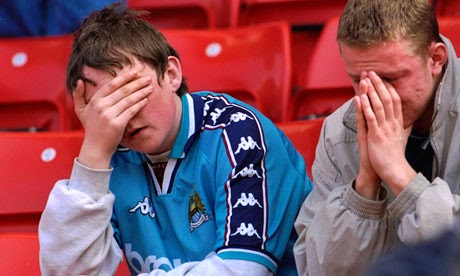
First off I’ll deal with the least favourable portion of the chat: City’s own fans. Lately there has been a generic response from certain supporters to question anyone that dares highlight an area where the team could be performing better. The usual Action Man pull-string line sounds something like, “Remember that we used to be shit.”
MCFCRelegated

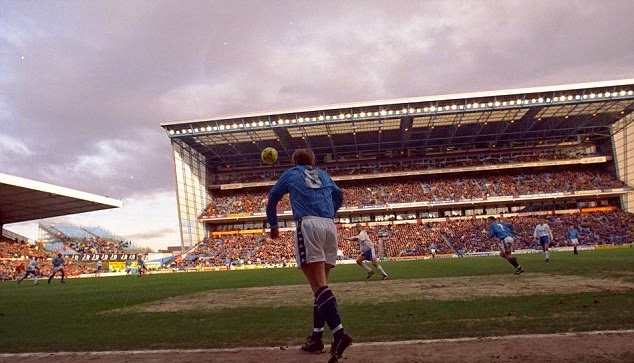
This is something that can’t be argued. But I doubt that these fans were walking away from Maine Road hiding their disgruntlement in those darker days. I dealt with the pain during the infamous season in the third tier of English football by having an extra pint at half time. Over said drink I’d criticise the players as I saw fit. It didn’t mean I wasn’t 100% behind the team, but to fail to see areas, and then comment, where the club should be better is playing the role of a blinkered fan.

I’d never boo a City player, I don’t think I even groaned like some with Lee Bradbury, nor would I offer an in-depth dissection of the team in the wrong public forum. But between fellow City fans there’s nothing wrong with pointing out where it’s going awry or which player needs to offer more. I’m not saying we should forget those bad days – they make me all the more grateful for the present – but to lean on them and ignore shortcomings shows a lack of ambition. We’ve moved on as a club and with that the mindset has to evolve.

This brings us to the next area of concern: The way we are perceived by others. Nowadays if a City fan shows any degree of confidence he is labelled as arrogant. That he has somehow forgotten that City was once a non-threat. And yet at the same time the opposing voice will point out that City should be winning because of the investment spent on the squad. It makes intelligent debate impossible when so many are unfairly gunning for the blues.

Much is obviously made about the money spent. My views on Financial Fair Play have been written here many times so I’ll spare retreading old ground concerning this oxymoron. Needless to say the detractors appear happy to see City fined and squad restricted in Europe this season, without ever explaining why the double standards within FFP are acceptable to them.

When City was playing catch-up, thus spending heavily, the process was demonised in the press. The very same press that wrote in terms of endearment and excitement when Manchester United splashed the cash this summer. Even now they report with growing arousal that they will continue the splurge. But they’re allowed because it’s their money, despite being in debt and City don’t owe anyone a penny. Other teams are applauded for business choices that bring about investment from foreign markets but City are viewed with suspicion for adopting new methods like sister clubs.

MCFCAS

The double standards do not stop there. Much is written about how excessive spending is killing the youth system in England. Yet the ambitious academy City has recently launched wasn’t met with the same fanfare as one at United or Anfield would have been. Sheikh Mansour’s best intentions are conveniently under-reported, areas open to interpretation overplayed. If any doubt exists to United’s youth development we are reminded about the class of ’92, as if it’s the only measuring stick, still recent and relevant.

If this now appears like negative comments to detract from facts it’s barely worthy when placed alongside the professional examples. Many articles written nowadays are undoubtedly click-bait for the masses. The tabloids will be targeting groups they believe have larger numbers, like Liverpool and Manchester United fans. This is fine if the articles are club centric and not written to the detriment of others. Instead the click-bait stories are often written in a manner directly attacking competitors with tripe. The chosen teams are protected and given weekly prayers the press hope are prophecies; the unfavourable clubs are knocked down and written off without consulting the available evidence.

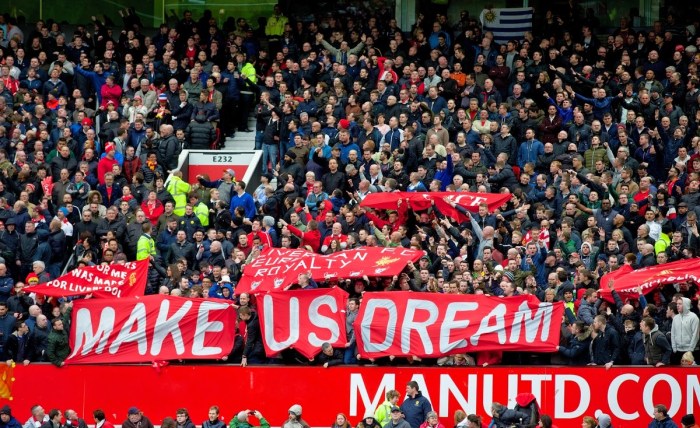
For the last two Premier League seasons the UK press has awarded the title early. Liverpool secured it with a month to spare last season, this year the Chelsea Invincibles took the title in November. Liverpool was lauded last year, as if the third highest spenders in Premier League history had never spent a penny, that Brendan Rodgers was a demigod and they “deserved” it. Pellegrini went about business like a class act, without ever receiving credit for hard work and the correct choices that brought about City’s most successful season.
LFCDreaming

This season we now sit on twenty games played, City and Chelsea have the exact same record, nothing separates them other than alphabetical order. But it’s still Chelsea that play the role of the chosen ones. Stats aside, because there’s no real split there, it’s hard to understand why the press and media are so quick to dismiss City. While they are busy romanticising over Mourinho’s team they aren’t asking the appropriate questions.

Had the two teams been tied at New Year but it was Chelsea that had suffered the loss of all available strikers throughout December, with their best one still out for a few more weeks, and John Terry had been out the side, then the anticipation that they would go on to secure the title once they were back to fitness would make sense. However, it’s City that have battled on with depleted numbers but for some reason this hasn’t been placed into any equations. Nor has the probability that at some point Chelsea are likely to lose major players. We know how City respond with men down – they close an eight point gap. How will Chelsea fare when they lose big names for long periods?

Chelsea are still spoken about as some unstoppable force, a City side carrying significant injuries is sneakily brushed aside. I’m not saying the press shouldn’t report City’s weaknesses, but they should be placed into context. Any areas that could be better only serve to show just how strong the best parts of City’s play are. Everyone is a harsh judge during Champions League games but Liverpool limped out of a weaker group without nearly as much inspection.

The press need to stop the pathetic click-bait, crowd mongering when it comes to Manchester City. Every team deserves to be given the same fair crack of the whip. And City fans need to stand together without forming fragmented groups just because of differing opinions. All we need is constructive criticism. Save the blinkered droning, combined with sickening courting by the press, for other teams.
The Trouble with Touré

The Trouble with Touré

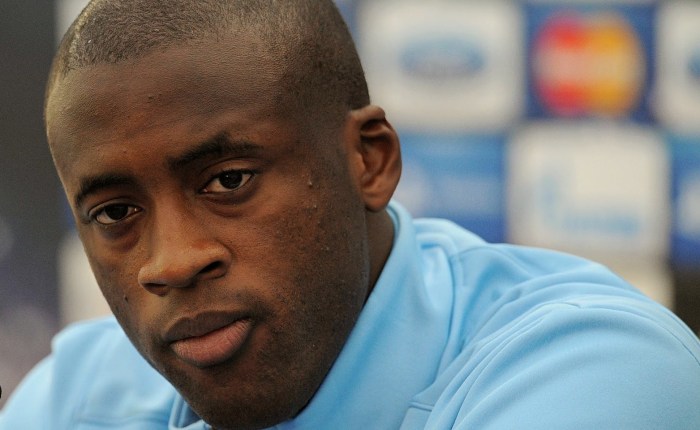
Certain things can’t be denied when it come to Yaya Touré. His talent is unquestionable. Last season he drove Manchester City to a league and cup double, scoring 24 goals in all competitions from midfield. He is also controversial and divides the opinion of loyal supporters. From missed birthday cakes to protracted transfers, he appears in the media for the wrong reasons, when it’d be more fitting if he was revered in the same way players like Messi and Ronaldo are. Or is this a stretch too far?

Before we go any further, I should make my personal thoughts regarding a few things Yaya clear. In spite of his performance last season, I would have happily seen him sold in the summer. A number of factors played into this. The obvious one was the way he allowed his agent to act unprofessionally and disrespectfully toward the club. It seems obvious they were either haggling for an improved contract or were seeing if they could manufacture a move away. He’d just had the season of his life so they assumed Yaya’s stocks were high, that they should cash in.

Of course, they didn’t get a move, and City held firm. These initial actions undid all of Yaya’s work gaining loyalty from the fans. I have no problem with players wanting to move on. As Sami Nasri noted when he left Arsenal, he wasn’t a fan, it’s just his career. I get that. I don’t expect everyone that pulls on the blue shirt to be a City fan. This doesn’t mean they can act in manner that wouldn’t be acceptable in another line of work. Yaya was unprofessional. This combined with the high wage, the fact he’s already 31, meant it wouldn’t have been a terrible move to balance the books the same summer we faced FFP fines and restrictions, by offloading a player that had stepped out of line.

The standard response here is to argue he is irreplaceable. Well, no man on the planet is irreplaceable. I’m not suggesting there is a like-for-like player out there. City would have needed to change the way the team plays. Formed a Plan B and C. Given the one dimensional tactics we adopt in the Champions League, this wouldn’t have been such a bad thing. Mentioning the Champions League, it is worth noting that Frank Lampard, the 36-year-old, warming-up for his American vacation, looked a level above regular City midfielders the night we played Roma. The only one comfortable at that level. So perhaps we shouldn’t place Yaya on that pedestal just yet.

Which brings us to the main niggle I hear at the ground, in the pub afterwards, and in groups and forums: The idea Yaya can’t be dropped/should be dropped. Some argue his moments of magic, which appear from nowhere and clinch big games, allow him to drift rather than put a shift in. That he looks laboured when he’s not. Others argue that no player should be guaranteed a place if their form continues to dip. I sit more on the fence with this one. At some point any player, regardless of stature or former contributions, should face the axe if they fail to deliver. For me, at this moment in time, Yaya is still one of the first names on the team sheet. The recent Aston Villa game is a good example of why he’s a worthwhile passenger to have along for the ride.

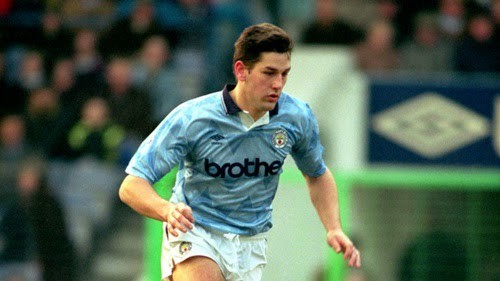
The idea of who your favourite player is should lend an idea to the damage Yaya has inflicted on his own legacy with the club. David White is my personal favourite. I know he’s not the best footballer I’ve seen play for the Citizens. But watching him burst off at pace, smash shots on goal, was like watching a superhero when I was younger. I know nostalgia plays its part there. It still breaks my heart, that Niall Quinn made the club’s Hall of Fame, and White didn’t.

MCFC White

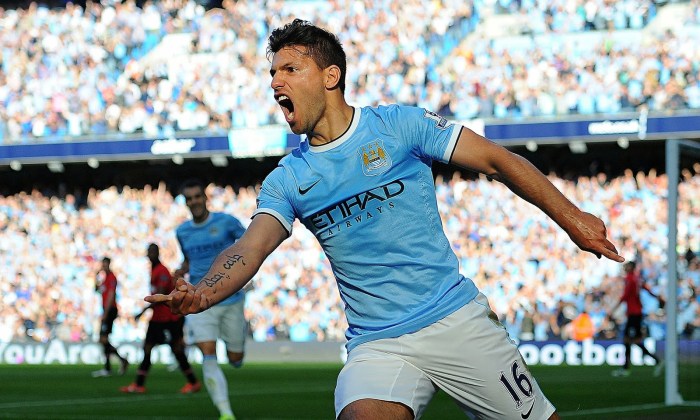
As for the best player I’ve seen, the most talented, it has to be from the current crop. I think Sergio is a true world class talent, belonging in the upper echelons of the world elite. David Silva also rates highly; if he added more goals to his game it’d be hard to dismiss him. Yaya Touré should be above both of these though, in terms of contribution and evident talent. Yet, how many City fans would have him as their number one now?

There’s still time for the fans that criticise him to warm once again. The tarnished summer can be painted over with the gloss of further success. I don’t subscribe to the idea any dip in form is a loss of interest. Reneging on the agreement he wouldn’t attend the 2015 African Cup of Nations could be seen as a further effort to appear inflammatory, I suspect it’s just a change of heart. Also, the loss of his brother will be weighing heavy on him and affecting his actions. Such an experience often requires years of recovery.

Yaya hasn’t been given the recognition by external awarding bodies. Last season he was cruelly overlooked. It’s easy to see why that could breed a feeling of being unloved. It doesn’t excuse his actions over the summer, but as fans we should wipe the slate clean. If the professional critics fail to give him his dues, the best we can do is start sending back positive vibes from the stands.

Empty Seats, Empty Gestures

Empty Seats, Empty Gestures

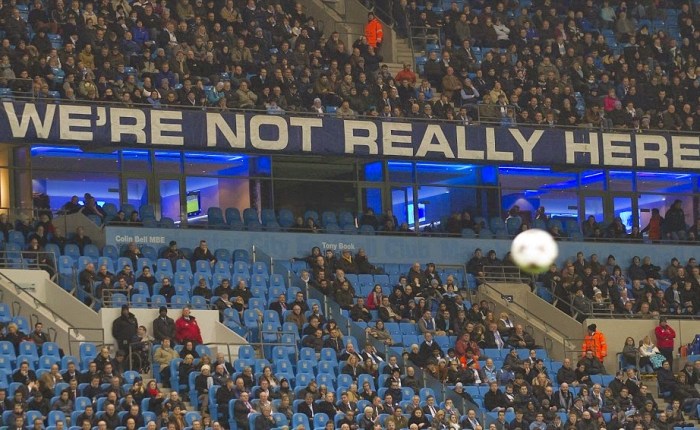
Much has been made in the aftermath of Roma’s visit to Manchester City about the number of empty seats at the Etihad Stadium. Lead by former Manchester United players, Ferdinand and Scholes, the atmosphere – or lack thereof – and City’s passion for European competition has been called to question. It’s easy to lead a charge of criticism, fuelled by sour grapes, when you conveniently ignore the overriding factors. The loyalty of City’s masses should not be doubted, the course of the modern game should.

First off the bat, I’m not here to make excuses for the poor attendance at the Etihad last night. It was disappointing. Normally when I write these articles I try (but probably fail sometimes) to keep my blue side suppressed and present an opinion based on the good of the game. Today, my opinion will understandably sound like it is coloured blue, the defence of the crowd last night has widespread issues serving as an undercurrent.

It’s all too easy to cast judgement over the lack of support and paint a picture that Manchester City fans care less or lack the passion of rival teams. It almost seems that the way to chip away at City’s rise to the top is to question if the people at the heart of the club – the fans – deserve to be there. I didn’t hear what the United old boys said last night, I was at the game and don’t record substandard broadcasts to watch when I get back from the ground. But I get the gist of it. From what I have read today, Scholes questioned why fans weren’t in the ground early. Well, we have City Square which provides entertainment before kickoff within our stadium complex. I’ll forgive him this oversight because there wasn’t room for such a thing when he worked at his outpost in Trafford Borough.

City Square

The low attendance has obviously been jumped on from all quarters. To tie this to the passion or dedication of City fans is absurd. I am fortunate enough to be able to afford a ticket to all home games in every competition. This doesn’t make me a better fan than a father of four on the minimum wage, struggling to make ends meet, who decides £35 for a ticket was a stretch too far when he could watch it for free on television. Remember, this is a club that kept its support in the third tier of English football, with an average attendance back then of 28,780.

Pollock

There is clearly a loyal core. City is new to the game of attracting global fans, new to the Champions League. With this is mind, they should be incomparable to Liverpool and United, yet, last night the clubs were slotted side-by-side to further demonstrate the low turnout. Years of worldwide exposure will gain any club the tourist fans, the glory seekers, the more fickle fans. In heavy numbers these fill empty seats. If City stay in the upper echelons of European football for the next decade these fans will migrate to the Etihad. That’s why the stadium is undergoing expansion – it is future proofing.

Scholes must also have a short-term memory. It wasn’t that long ago Manchester United only managed to fill 47,000 seats for a Champions League game against Cluj. Were the United fans not taking the competition seriously that year? The difference being, United sold a full allocation but fans still failed to travel. This brings us to another factor: United force season ticket holders to commit to Champions League games, City have a separate cup scheme.

This brings us to the main problem with the modern game. Cost. I have spoken out against FFP for a long time, and yet again I get the opportunity to here. Not that I take pleasure in doing so because this time it’s not to highlight how UEFA are attempting to protect the established big clubs. Unfortunately this anti-FFP observation is how the by-product of the unjust system affects the fans. Clubs are attempting to break even, the way they are accomplishing this is higher ticket and merchandise prices. Those empty seats at the Etihad were physical reminders that FFP is bad for the game on many levels.

Manchester City is the perfect club to place this issue in the spotlight. Unlike some teams, they aren’t run by debts or loans. Sheikh Mansour can pay for all wages and transfers upfront. FFP isn’t protecting a club like City from ‘doing a Leeds.’ FFP wouldn’t have even protected Leeds, they would have complied. It protects the European giants from being caught. But let’s say for a minute UEFA were genuinely worried solely about the rising costs within the game, if so, FFP was a weak attempt at a soft wage cap. They must have hoped clubs would, over time, lower wages to comply with the break-even rule. This hasn’t happened.

Since FFP’s introduction wages have continued to soar. Manchester United isn’t even playing in the Champions League and offer weekly wages in excess of £300,000. This leaves UEFA – if their intentions are genuine – with a few remaining options. The first would be to introduce a hard wage cap that all clubs across Europe adhere to. Observations would have to be made for certain areas (I.E. Teams in London can have a slightly higher one to counter the cost of living; Monaco, or teams in lower taxed countries like Spain, offer less so players can only take home the same amount after tax). Tied into this would be a new law on ticket prices. Just as clubs can’t offer high wages, they’d no longer be able justify high ticket prices.

The next would be to copy Baseball’s Rich Tax. I discussed this in the past (Financial Fair Prejudice) so won’t labour the point, but a similar method could be adopted in football. Instead of a set budget like baseball, we keep the break-even method, but when a team exceeds it they pay a tax as punishment on every penny over the limit. Rich clubs that have no debts could still operate safely. It would act as a deterrent rather than a way to stunt growth. Again, if a team is paying the rich tax it has no excuse for high ticket prices, the fans should be put first in the UEFA directive that would monitor the rich tax. In baseball the tax also increases for every cumulative year spent over the budget marker (or break-even in football’s case).

Mansour

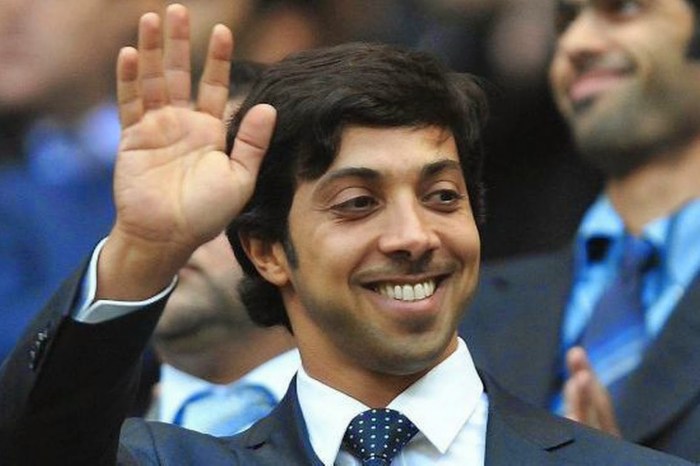
The final way to help fans would be the most direct and charitable method. As mentioned, Sheikh Mansour doesn’t need a dime from the City fans. He could comfortably pay for everything without needing to worry about his accountant. He has to charge the fans more to comply with Financial ‘Fair’ Play. His fines disappear to other European clubs who are also charging fans high prices to break-even. There should be flex in the break-even for ticket prices. Just as things like stadium expansion and youth development are left off the books for FFP purposes, there should also be an allowance to wipe losses when a club voluntarily charges less for tickets. City could sell tickets for £10, making it affordable again for the working class man, and sparing UEFA the blushes of empty stadia. If a generous owner can afford to invest at a loss, then is there a better way to do? Rather than higher wages to line the pockets of millionaire footballers, they could help make ends meet for the loyal masses.

It should be noted that in Germany they do offer cheaper tickets. It seems that here, the trend is to take from every source and ignore the fans. We have a product that commands high revenues but isn’t sustainable. Greed is dictating the game. Sky and BT fought and paid higher revenues for TV deals than ever seen before. The main reason was to wrestle control of the UK broadband market. However, I have been quoted as saying before: The value of something is only what someone is willing to pay. Whatever the motive, the price for TV deals has once again been set high. Perhaps UEFA, because we know they like to dictate, should place a rich tax on clubs that make more than a predetermined limit on such revenues. The tax would be paid by lower prices on the gates accordingly. Fine, take your Sky money, but it’d mean only being able to charge a tenner on match day.

Some of these suggestions would be legally difficult to implement. But when you think about it, FFP itself should have faced many more legal challenges but we now live by it. It seems what UEFA says, goes. It’s about time they did something to protect the fans from escalating prices. Without the fans, it’s really not a sport at all.